If you’re searching for ‘yacht job Australia’ online, then you have come to the right place. If you are one of those who adores adventuring among the seaways, then working on a superyacht is exactly for you. And the bonus is that Australian crews are in great need of Yacht jobs in Australia! This guide is put together by Ivana and Antonija — Chief Stewardesses with 10 years on 100m superyachts — and our training team who place Australian crew on yachts every month. Everything here is based on what actually works, not theory.
Updated May 2026 by Drazen, Ivana and Antonija, Chief Stewardesses with experience on 50m superyachts. If you know which role you want, go straight to the dedicated guide:
- How to become a yacht stewardess in Australia — step-by-step guide for stewardess candidates
- How to become a yacht deckhand in Australia — step-by-step guide for deckhand candidates, including Med and Caribbean season guide
Where to Start — Entry Level Yacht Jobs in Australia
If you are starting from zero, you will begin as either a junior deckhand or junior stewardess. These are the two entry-level positions on every superyacht and the roles that don’t require prior yacht experience.
- Junior Deckhand — deck maintenance, line handling, tender driving, water sports. Physical role, outdoor work. Full deckhand guide here.
- Junior Stewardess — interior service, housekeeping, guest dining. Requires strong hospitality instincts. Full stewardess guide here.
Both roles pay €2,000–€2,800/month tax-free with free accommodation and food included. Full salary breakdown here.
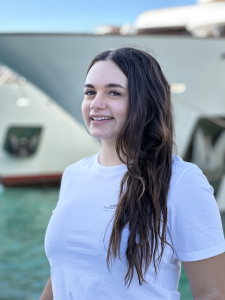
What Is a Superyacht job?
A superyacht can be either a sailing or motor vessel, carries 12 guests or less, cannot carry cargo, and is 24 meters long.
Yachts travel to the world’s hot spots during the best time of the year and are amazed by innumerable places throughout the world that are unthinkable to be seen at any other time.
STCW — The Certificate You Need Before Anything Else
Before ENG1, before agencies, before your CV — you need STCW Basic Safety. It is the non-negotiable entry ticket to any deckhand or stewardess position on a commercial vessel over 24 metres.
STCW covers firefighting, first aid, personal survival, and safety procedures. It takes 5 days and the certificate is valid for 5 years globally. AMSA recognises MCA-approved STCW — most Australian crew train in Croatia or the UK where costs start from €849. Full STCW Australia guide here.
— After the visa section, add:
How to Actually Get a Yacht Job from Australia
The biggest mistake Australian crew make is completing their STCW and waiting at home for jobs to come to them. The crew who find work in 4–8 weeks do this:
- Complete STCW Basic Safety
- Get ENG1 or AMSA medical certificate
- Build a proper yacht CV — free template here
- Register with at least 3 crew agencies — best agencies here
- Go to Palma de Mallorca, Antibes, or Split and dockwalk — dockwalking guide here
Airlie Beach and Sydney have some local opportunities but the volume of superyacht positions is in the Mediterranean. If you want work fast, go there.
Yachting Industry in Australia
The superyacht industry is now witnessing its best times, with a huge number of yachts being constructed. But there is a great superyacht crew shortage.
Since the number of cruises is expected to grow 66% by 2030, the beachfront industry would need an additional supply of 22,000 crew members to operate these cruises.
Since most Australians were born and raised on and around water, it is easier for recruitment managers to hire experienced Australian crew. They come from an ocean-loving background, and that gives them the leverage to rise fast on the professional ladder.
Type of Yacht Jobs in Australia
Here is the list of yacht crew on the luxury cruise.
1. Yacht Captain
It is the highest-ranked position available on any private yacht. The basic function of a Captain consists of efficient and safe yacht operation and crew. The Yacht Captain is in charge of the yacht, crew, owners, and guests, including personnel management, shipyard engineering, legal and regulatory compliance, and answering all questions from the owner. This entails fundamental leadership and determination of the organization.
2. Shipmates/Chief officer
These officers are known as First, Second, and Third Mates, often collectively called officers. A First Mate or Chief Officer is just like a Captain, assisting in solving crucial problems. Ship’s mates are very well-educated personnel. Their job responsibilities involve:
- Manning the bridge.
- Controlling the deck crew members.
- Undertaking other tasks as requested by the captain.
3. Chief Engineer
The person in charge of the Engineering Department and all technical aspects of the boat and its gear. The responsibilities of the Chief Engineer are to manage day-to-day mechanical and electrical operations, ensure all the maintenance plans are carried out, and communicate with all the subcontractors. Small yachts may need a hybrid Captain-Engineer position.
4. ETO / AV/IT Officer
The Electro-Technical Officer and Audio Visual/Information and Technology Officer prioritize maintenance or even control of all the electronic and computer systems onboard, including competent communication functions. It includes radio, radar, telephone, satellite communications, navigation systems, computer use, Internet connection, and interior equipment (TVs, sound systems, etc.).
5. Deckhand
This position is physically demanding and requires a lot of time and effort. Deckhands are crew members in charge of cleaning and keeping the yacht exterior as pristine as possible. This comprises maintaining, washing, polishing, and varnishing the yacht’s exterior, as well as operating the yacht’s tenders. The crew member’s duties also encompass helping passengers with beach toys and any other outside features, such as a Jacuzzi.
6. Chef
Good food, it seems, makes great trips even greater. Therefore, the yacht experience is better accompanied by good food, especially when guests are involved. The yacht chef prepares meals for guests and the crew (separate crew chefs in large yachts). Additionally, it serves them in case any help is needed.
7. Chief Steward/Stewardess
The position of Chief Stew is that of lead among the crew members. The tasks are almost the same as those of other stewards/stewardesses onboard the vessel, but only on a more senior level, such as the departments in the interior and their training. They are in charge of all the tasks carried out by the Purser on the large yachts.
8. Steward/Stewardess
The prime duty of the Steward / Stewardess is to keep the entire yacht, including the inside, spotless. They maintain the highest possible level of comfort for the owner and guests. This work includes serving visitors’ food and drink, preparing guest activities, packing and unloading luggage, and being on call at any time of the day or night if guests require something. On other yachts, some help the deck crew tie the yacht. If you want a Stewardess yacht job in Australia, it is important you get fully STCW Certified.
Note: All crew members need an ENG1 medical certificate, which proves they are physically capable of working at sea. It is valid for two years.
Get a Superyacht Crew Visa to Work on A Superyacht In Australia
If you wish to apply for a Superyacht Crew visa, you must already be working as a crew member on a Superyacht.
Visa subclass 408 for crews of superyachts is an interim visa for crew members onboard a superyacht while in Australia. This visa allows those crew members to go aboard a superyacht and stay in Australia for a maximum of 12 months. Visas may be issued for periods of 3, 6, or 12 months.
The crews’ families and dependants are not on the list to be eligible for this visa; they must apply for an eVisitor (subclass 651) or Visitor Visa (subclass 600).
Find Yacht Job Australia
It is an incredible opportunity for travellers who are not certain about their future and allows them to travel all over the world while being paid for it.
At Yachtiecareers, superyacht crew training courses are the fastest way to enter the superyacht world. Along with the necessary qualifications and skills, we provide your superyacht CV, business cards, and our 24/7 support and guidance onboard.
Being a crew member offers a chance to climb the career ladder and get a job in the yachting sector. And, you could do that while sailing the world and saving money.
Starting Your Yacht Career from Australia — Where to Begin
You do not need to fly to Europe on day one. Australia has a genuine yachting scene and starting locally while you build your certifications and experience is a smart first move — especially if you want to test whether the lifestyle suits you before committing to a full season abroad.
Where the work is in Australia:
- Airlie Beach and the Whitsundays — the highest concentration of charter yachts in Australia. Day work and short contracts are available here year-round. This is the best place in Australia to dockwalk and meet captains in person.
- Sydney Harbour — private yachts and charter vessels, particularly around summer. Racing crew are often needed for Sydney to Hobart and Hamilton Island Race Week.
- Hamilton Island — resort-based yachting, strong demand for both deck and interior crew during regatta season.
- Gold Coast and Fremantle — smaller scenes but worth registering with local agencies if you are based nearby.
Before any of this, you need your certifications in order. Read the full STCW Australia guide to understand what AMSA recognises and whether completing your training in Australia or Europe makes more financial sense. Most Australian crew find it cheaper and faster to complete full STCW and yacht training in Croatia and go straight into European job searching — but starting locally is a valid path if you want to build sea time first. Your yacht CV and crew profiles should be live and active from day one. Captains search crew databases constantly — you want to be findable before you even arrive at a marina.
Yacht Jobs in Asia: The Underrated Opportunity for Australian Crew
Most Australian crew look immediately to Europe and miss a significant opportunity much closer to home. Asia has a fast-growing superyacht market and Australian crew have a natural advantage over European crew — closer time zones, cheaper flights, and familiarity with Pacific sailing conditions.
The main Asian hubs for Australian crew:
- Singapore — Marina Bay and ONE°15 Marina — Singapore is the largest superyacht hub in Asia. It serves as a refit and transit base for yachts moving between the Indian Ocean, South-East Asia, and the Pacific. Crew opportunities here are year-round, particularly for engineers, deckhands and stewardesses on larger vessels.
- Phuket, Thailand — the largest charter fleet in South-East Asia operates out of Yacht Haven Marina and Royal Phuket Marina. The Thai charter season runs October to May, which aligns neatly with the European off-season. Australian crew who work Med summers and Thai winters rarely come home.
- Hong Kong — a smaller scene but with some large private vessel activity. Worth monitoring for senior crew positions.
For Australian crew, Asia is the most accessible offshore market. Flights from Sydney or Melbourne to Singapore or Phuket typically cost AUD $400–$800 return. If your first Med season does not go to plan, Asia is the logical next step — not a fallback, but a genuine season in its own right.
Yacht Jobs in Dubai and the Middle East
The Middle East is one of the most lucrative and underrated markets for Australian crew. Dubai Marina is one of the largest marinas in the world, and the region’s concentration of ultra-high-net-worth yacht owners means tip income on top of salary can be significant.
Where the work is:
- Dubai Marina and Port Rashid — the main hubs for superyacht crew placement in the UAE. Captains here are actively recruiting year-round, with peak demand from October through April when the weather is favourable for cruising.
- Abu Dhabi — growing fast, particularly around the Formula 1 season (November) when private yacht activity peaks dramatically.
Why this works for Australian crew: The Middle East season (October to April) overlaps with the European winter, meaning Australian crew can work a Med summer season (April–October), transition to Dubai for the winter season (November–April), and earn continuously. The flight from Europe to Dubai is under six hours and costs very little between seasons. Salary expectations in the Middle East are high. Owners in this region are accustomed to paying for quality and tips on private charters can match or exceed your base salary. See the full yacht crew salary guide for current figures across all roles and regions.
The Caribbean and United States — Year-Round Season for Australian Crew
The Caribbean runs November through April and is the natural continuation of a Mediterranean season for Australian crew who want continuous income. Fort Lauderdale in Florida is the main transit hub — yachts reposition from the Med to the Caribbean through Fort Lauderdale every October and November, and captains hire crew there before heading south.
Key Caribbean hubs for Australian crew:
- Fort Lauderdale, Florida — the most important crew placement city in the world outside of Palma. Every serious yacht crew member should register with agencies here and understand how the Fort Lauderdale dockwalking scene works. Read the Florida stewardess training guide if you are completing training in the US.
- Antigua — peak activity December through April. Antigua Sailing Week in April is one of the best dockwalking events of the year.
- St. Maarten — large refit industry means crew are needed year-round, not just during charter season.
- British Virgin Islands and Grenada — strong charter fleet, consistent demand for both deck and interior junior crew.
Australian crew working in US waters need to understand their visa situation. Read the B1/B2 visa guide before your first Caribbean season — the rules differ depending on whether you are on a private or charter vessel and which flag the yacht flies.
Full guide to finding yacht jobs in the Caribbean.
Europe — The World’s Largest Superyacht Market and Where to Get Trained
Europe is where the majority of the world’s superyachts operate during summer, where the most prestigious marinas are, and where the most efficient training infrastructure exists for international crew. For Australian crew serious about a long-term career in yachting, Europe is not optional — it is the centre of the industry.
Why complete your STCW and yacht training in Europe:
- MCA-approved training is the international gold standard — completing your STCW Basic Safety through an MCA-approved provider in Europe means your certificate is accepted on every superyacht in the world
- Training costs in Croatia and Spain are significantly lower than in Australia or the UK — full deckhand training packages in Split start from €2,940 including 10 certifications, accommodation, CV and job support
- You finish training already in the Mediterranean, certificates in hand, with access to the docks where captains are actively hiring
The European hubs — where the world’s largest superyachts are:
- Split, Croatia — where Yachtiecareers is based and where we run all European training. Split is the fastest-growing superyacht destination in the Med, accommodation during training is arranged, and the cost of living while job searching is among the lowest in Europe. ACI Marina Split is one of the best dockwalking marinas in the Mediterranean.
- Palma de Mallorca, Spain — the single most important crew placement hub in the world. More superyachts base in Palma than anywhere else. If you complete training in Split and have not found a position, Palma is your next stop. The Club de Mar is the primary dockwalking location.
- Antibes and Monaco, France — home to the Monaco Yacht Show and the highest concentration of 60m+ superyachts in the world. Junior crew positions here pay more and the tip income is significantly higher than on smaller vessels. The Antibes crew house and dock are established job-finding infrastructure that every crew member should use.
- Barcelona, Spain — growing fast as a superyacht base, particularly for yachts that winter in Spain rather than Palma. The OneOcean Port Vell marina is the main superyacht location.
- Athens and Piraeus, Greece — Greece has expanded dramatically over the last three seasons. The volume of charter yachts operating out of Athens and the Cyclades now rivals Croatia. For junior crew, Greece represents a genuine alternative to Palma if the main hubs feel competitive.
- Genoa and Porto Cervo, Italy — Genoa is the major refit centre for the world’s largest yachts. Porto Cervo in Sardinia hosts the most exclusive private yacht gathering in the Med each summer. Both locations have strong demand for experienced crew.
For the full picture on what you need to legally work in Europe and how visas work across different yacht flags, read our complete guide to yacht crew visas in Europe. Ivana’s advice for Australian crew: stop waiting for the right moment. Book your stewardess training or deckhand training, fly to Split, finish the week with your certificates, and start walking the docks. Every Australian crew member who follows this sequence finds a job. The ones who don’t are the ones who go home to think about it.
Full STCW and Yacht Training with Yachtiecareers (Aussie-Crew)!
- You get added to our crew community and WhatsApp groups with 24/7 access.
- STCW in person 7 days training and crew accommodation in Croatia with the other crew. Get your ENG1 + your new CV photo and final CV.
- We connect to agents, yachts and start the job search.
- Get first job and we set up bank account.