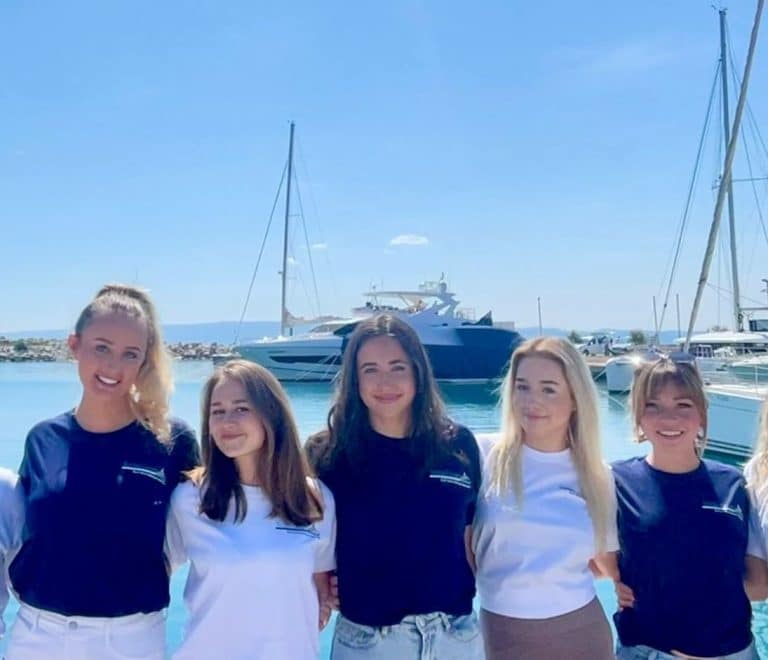
At Yachtiecareers we run STCW Basic Safety in Split, Croatia. Most of our students complete the full course with the help of our experienced Yachting team in 10 days and move directly into job search — many receive offers during training week itself. Over 200 students have left verified reviews of their training experience on Google Reviews.
But before you can step foot on a commercial yacht, one certificate is non-negotiable: STCW Basic Safety. It doesn’t matter if you’re applying as a deckhand, stewardess, or chef — every entry-level crew member needs it. This guide covers exactly what STCW Basic Safety is, what it includes, how long it takes, how long it lasts, and what it costs across Europe.

What Is STCW Basic Safety?
STCW stands for Standards of Training, Certification and Watchkeeping for Seafarers. It’s an international framework set by the International Maritime Organization (IMO) that defines the minimum safety standards for anyone working at sea commercially.
STCW Basic Safety — formally known as STCW A-VI/1 — is the entry-level certification within that framework. It’s the baseline requirement for working on any commercial vessel over 24 metres, which includes the vast majority of charter and private superyachts.
Without it, no legitimate yacht will take you on as crew. It’s not optional and it cannot be skipped.
Who Needs STCW Basic Safety?
Anyone entering the yachting industry for the first time needs STCW Basic Safety — regardless of role. That includes:
- Deckhands
- Stewardesses
- Chefs and galley crew
- Engineers starting out
If you’ve previously worked in the cruise industry or on commercial vessels, you may already hold STCW Basic Safety. Check your certificate — it’s valid for 5 years and must be renewed before it expires.
What Does STCW Basic Safety Include?

STCW Basic Safety is made up of four mandatory modules, each covering a core area of maritime safety:
Personal Survival Techniques (PST)
How to survive in the water — using lifejackets, life rafts, survival suits and emergency signals. This is a practical course with in-water exercises.
Fire Prevention and Firefighting (FPFF)
How to identify, prevent and fight fires onboard. Includes hands-on firefighting using live fire equipment.
Elementary First Aid (EFA)
Basic first aid for emergencies at sea — CPR, wound care, managing medical situations until professional help arrives.
Personal Safety and Social Responsibilities (PSSR)
Safety procedures, emergency drills, watch duties, working relationships and the legal framework of working onboard.
All four modules must be completed and passed to receive the full STCW Basic Safety certificate. Training is conducted in-person — this cannot be done entirely online.
How Long Does STCW Basic Safety Take?
The in-person training typically runs over 5 to 6 days. Some providers compress it into 4 days; others spread it across a full week depending on how the practical sessions are scheduled.
If you’re completing STCW as part of a broader training package — which most entry-level crew do — the full certification period is longer. A complete deckhand or stewardess training programme that includes STCW plus all required additional certifications typically runs 10 days.
How Long Is STCW Valid For?
STCW Basic Safety is valid for 5 years from the date of issue.
Before it expires, you must complete a refresher course to renew it. The refresher is shorter than the original course — typically 2 days — and covers updates to safety regulations and practical refreshers on the core modules.
If your certificate expires before you renew it, you’ll need to retake the full course from scratch. Don’t let it lapse.
How Much Does STCW Basic Safety Cost in Europe?
The cost of STCW Basic Safety varies significantly across Europe depending on location and provider:
| Location | Approximate Cost (STCW only) |
|---|---|
| France (Antibes) | €1,400 – €1,600 |
| Spain (Palma) | €1,400 – €1,700 |
| Croatia (Split) | €1,500 – €1,800 |
| United Kingdom | €1,600 – €2,000 |
| Netherlands | €1,800 – €2,200 |
| Scandinavia | €2,000 – €2,500+ |
These prices cover STCW Basic Safety only. Most entry-level crew also need ENG1 medical certification, PDSD and Food Hygiene Level 2 on top — adding another €300–€600 to the total cost.
What Other Certifications Do You Need Alongside STCW?
STCW Basic Safety is the foundation, but most yacht captains and crew agencies expect additional certifications before they’ll consider you for a role. The standard entry-level requirement for most yachts is:
- STCW Basic Safety — mandatory for all crew
- ENG1 Medical Certificate — MCA-approved medical fitness certificate
- PDSD (Proficiency in Designated Security Duties) — required for security watch duties
- Food Hygiene Level 2 — required for anyone handling food onboard
Deckhands often also pursue RYA Powerboat Level 2 to operate tenders. Stewardesses may add STCW Crowd and Crisis Management for larger vessels.
For a full breakdown of every certification required by role, see our complete yacht crew certifications guide.
STCW Training in Europe — What to Look For
When choosing an STCW provider, make sure the course is:
- MCA accepted — the Maritime and Coastguard Agency is the UK authority that approves STCW training globally. Most reputable yachts require MCA-approved certification.
- STCW 2010 Manila compliant — the current version of the STCW framework. Any course that doesn’t reference Manila amendments is out of date.
- Practical, not just theory — STCW requires in-water survival exercises and live firefighting. If a provider doesn’t include these, the certificate won’t be accepted.
Split, Croatia has become one of the most popular locations in Europe for STCW training. It’s a major yachting hub, costs are lower than Northern Europe, and it’s possible to combine training with immediate dock walking and day work after certification.
Getting More Than a Certificate — Full Yacht Crew Training That Actually Gets You Hired
Most crew complete STCW and then face the same problem: they have the basic safety certificate but still need ENG1, PDSD, Food Hygiene, Powerboat Level 2 and practical yacht skills before any captain takes them seriously. That means more courses, more travel, more cost — and still no job.

The most popular option with over 200 5+star reviews from international crew is the Yachtiecareers Premium package was built to solve exactly this.
For €2,940 — less than the cost of standalone STCW in the UK, Netherlands or Scandinavia — you get every certification you need to work on a yacht, for both deckhand and stewardess roles, in one 10-day training block in Split, Croatia:
- STCW Basic Safety (MCA accepted)
- ENG1 Medical Certificate
- PDSD — Proficiency in Designated Security Duties
- STCW Crowd & Crisis Management
- Food Hygiene Level 2
- RYA Powerboat Level 2
- Seaman’s Discharge Book
- Full deckhand and stewardess training — both career paths in one package
Beyond the certifications, Premium includes 7 nights accommodation in Split, professional CV and photos, business cards, reference letter, B1/B2 visa letter and personal 24/7 support from experienced yacht crew throughout your job search — dock walking seminars, agency introductions and ongoing one-on-one guidance until you’re onboard.
Most standalone STCW providers hand you a certificate and wish you luck. We stay with you until you find a job.
View Deckhand Training → View Stewardess Training →
Frequently Asked Questions About STCW Basic Safety

Can I do STCW Basic Safety online?
No. STCW Basic Safety requires in-person attendance for the practical elements — firefighting, water survival and first aid cannot be completed online. Some providers offer a short online theory component before the in-person week, but the physical training is mandatory.
Do I need STCW before I apply for yacht jobs?
Yes. Applying without STCW is largely a waste of time. Captains and crew agencies will not progress applications from crew without the basic safety certificate.
Is STCW Basic Safety accepted worldwide?
Yes. STCW is an international standard recognised in every major yachting jurisdiction — Mediterranean, Caribbean, Pacific and US waters.
How long does it take to get hired after STCW?
The average time from completing training to securing a first position is around 6 weeks, though this varies depending on how actively you’re dock walking and registering with agencies. Having additional certifications beyond basic STCW significantly improves your chances and speed of placement.
How long does STCW Basic Safety last?
STCW Basic Safety is valid for 5 years. You must complete a refresher course before it expires to maintain your certification. If it lapses, you’ll need to retake the full course.
How much does STCW cost?
Standalone STCW Basic Safety in Europe ranges from €1,400 in France and Spain to over €2,000 in Scandinavia. Full training packages that include STCW plus all required certifications start from €2,395 — often less than STCW alone from premium-location providers.
What is the minimum age for STCW?
16 years old, though most yachts prefer crew aged 18 or over for entry-level positions.