
Working as yacht crew is a real, structured career path, not just something seen in Below deck. But can you work on a yacht without prior experience in the industry? – Yes, it is possible to work on a yacht without prior experience. Entry-level positions, such as deckhand or steward/stewardess, often require minimal experience. However, having relevant skills, certifications, STCW and a strong CV can increase your chances of landing a yacht job.
With the right mindset, preparation and guidance you can enter the industry without it looking intimidating. The reality is that thousands of new crew members enter yachting every year with no prior maritime experience. The difference between those who succeed quickly (often the first week) and those who struggle is rarely talent or background. It is understanding how the industry works and preparing correctly before starting the job search.
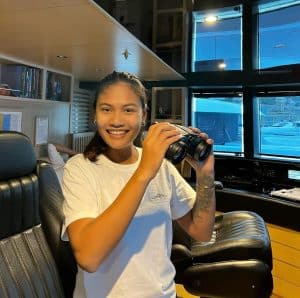
Yachting operates very differently from land-based employment. Jobs are filled quickly, expectations are high, and captains hire people who are ready to step onboard immediately. Many beginners apply too early, apply incorrectly, or do not have a CV including what Yacht Captains and Chief Stewardesses are actually looking for. This often leads to a challenging few first weeks of job search.
This guide explains how to get a yacht crew job step by step, using real-world insight from training and placing new crew season after season. It is designed to remove confusion, set realistic expectations, and help anyone who is serious about working on yachts move forward with confidence.
Quick Answer: The Fastest Way to Get a Yacht Crew Job
The fastest way to get a yacht crew job is to become hire-ready before you apply.
From our crew reviews you can see that most of our students get their first yacht job within 1–2 weeks of completing STCW certification. Many receive job offers during training week itself — not after.
Here’s why: we don’t just teach the course and hand you a certificate. Every intake includes structured job search seminars where students apply to Yotspot, crew agencies, and direct contacts with their new CVs — while our instructors Drazen, Suda, Ivana, Charlie, and Antonija are in the room to help. We started yachting over 15 years ago and still recruit and work on board in senior positions such as Chief Officers, Chief Stewardesses and Captains.
We also run organised dockwalking sessions in Split marina and the surrounding marinas, where dropping your CV in person to captains and first officers still outperforms sending 30 emails online.
The students who wait months for a job almost always make the same mistake: they use one channel and wait. The students who get hired fast run five or six channels simultaneously from the moment training ends.
Minimum Requirements to Work as Yacht Crew
The entry requirements for working as yacht crew are simpler than many people expect. You do not need previous yachting experience, maritime qualifications, or personal connections in the industry to start.
At a minimum, entry-level yacht crew must meet the following criteria:
- Be at least 16 years old
- Hold a valid passport
- Be able to communicate clearly in English. (It does not need to be your first language)
- Be medically fit to work at sea. During the training you get an ENG1 (Medical certificate equivalent). The truth is it does not have to be an ENG1, any IMO/MCA accepted Seafarers Medical Certificate is accepted.
- Be STCW Certified, available and flexible to start work with STCW Basic Safety and ISPS Personal Designated Security Duties.
Beyond these basics, Captains and recruiters focus heavily on presentation with character traits such as strong attention to details. Entry-level crew are not expected to know everything, but they are expected to be have a positive attitude, willing to learn and ability taking directions from the Captain and experienced crew.
Living and working onboard a yacht requires teamwork, long hours, and close living quarters. People who adapt well are those who stay professional under pressure, follow instructions, and contribute positively to the onboard environment.
We see repeatedly that candidates who understand these expectations early approach the job search with far less anxiety and far better results.
Required Yacht Training & Certificates (STCW, ENG1 Explained)
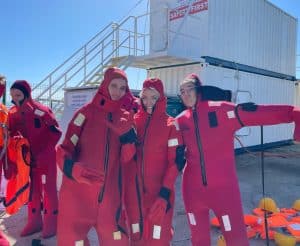
Before you can legally work on most yachts, you must complete mandatory safety training and pass a seafarer medical. These requirements are industry standards and are not optional.
The STCW Basic Safety Training is an internationally recognised qualification that covers fire fighting, sea survival, first aid, and personal safety responsibilities. Its purpose is to ensure that every crew member onboard can respond effectively in emergency situations.
In addition to STCW, you must obtain an ENG1 medical certificate. This confirms that you are physically and medically fit to work at sea and must be issued by an approved maritime doctor. It is included when doing the STCW in Croatia with Crew Accommodation is also available during the training.
Completing training before starting your job search is one of the biggest advantages a new crew member can have. Captains prefer candidates who are fully certified and able to join immediately, rather than those who still need to organise training.
Structured programmes such as Superyacht Stewardess Training and Superyacht Deckhand Training are designed to combine mandatory certification with industry preparation, which significantly improves job search outcomes. This also offer Food Hygiene Level 2 (Stewardesses) and RYA Powerboat level 2 (Deckhands).
Entry-Level Yacht Crew Roles You Can Apply For
Choosing the right entry-level role is essential. Many beginners slow themselves down by applying for positions that are not suitable for their experience level.
The majority of new crew start in one of the following roles:
Yacht Stewardess (Interior Crew)
Stewardesses work inside the yacht and focus on guest service, housekeeping, laundry, table service, and maintaining high presentation standards. This role suits candidates with hospitality, customer service, or service-oriented backgrounds.
Interior crew are expected to be organised, attentive to detail, and consistently professional. For many beginners, stewardess roles provide one of the fastest entry points into the industry.
Deckhand (Exterior Crew)
Deckhands work on the exterior of the yacht and are responsible for cleaning, maintenance, safety duties, and assisting with docking and water activities.
This role suits practical, hands-on individuals who enjoy physical work and being outdoors. At entry level, captains value work ethic and willingness to learn more than previous maritime experience.
Focusing on one role and tailoring your preparation around it leads to stronger applications and better results.
How Long It Really Takes to Get a Yacht Crew Job
There is no single timeline that applies to everyone, but there are clear patterns.
In some cases, new crew secure their first job during their training week. When candidates arrive prepared, complete their CV properly, attend job search seminars, and immediately begin applying and visiting agencies, opportunities can arise very quickly. We regularly see students interviewing, dayworking, and accepting positions before training is even finished.
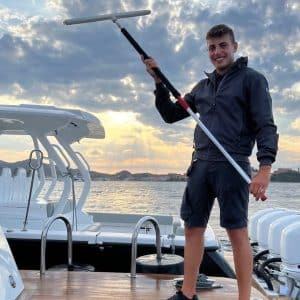
Outside of this scenario, the fastest path involves being present in a major yachting hub and treating the job search as a full-time commitment. When everything is done correctly, finding work within a few days to a couple of weeks is realistic.
We train over 20 students every month and have placed more than 100 crew members on yachts. Based on that, here’s the honest answer:
During training week: A significant number of students receive job offers before the course even finishes — through agencies we contact during seminars, through dockwalking in Split, or through direct applications submitted with instructor support.
Within 1–2 weeks of certification: This is where most students land. CV written, applications active across multiple platforms, dockwalking done.
Longer than 2 months: Almost always means wrong timing, wrong location, or using only one job platform.
There is no magic — it’s timing, a strong CV, and using every channel at once.
For most beginners, a healthy and realistic expectation is several weeks. This allows time to apply properly, attend interviews, complete trial days, and gain confidence onboard.
What slows the process down is hesitation — delaying applications, avoiding dockwalking, or waiting to feel “ready” instead of taking action.
Yacht Crew Salary Expectations (Entry-Level)
Entry-level yacht crew salaries are competitive, especially when accommodation, meals, and many living costs are covered onboard. Junior crew receive a fixed monthly salary. When you are starting to work as a Junior Stewardess salary or a Junior Deckhand salary you can expect a salary between 2300-3000€/ month. On charter yachts, tips can significantly increase total salary, especially during busy seasons in the Mediterranean and Caribbean.
It is important to view the first job as an investment in experience. Strong references, proven reliability, and a good onboard reputation often lead to rapid progression and increased earning potential.
We consistently see that crew who focus on learning and professionalism early advance faster than those who focus only on salary.
Common Mistakes That Stop People Getting Hired
After working with new crew across many seasons, the same mistakes appear again and again.
- Applying for jobs before completing mandatory training
- Using generic CVs instead of yacht-specific ones
- Poor or inappropriate CV photos
- Waiting for confidence instead of taking action
- Not being physically present where hiring happens
These mistakes are rarely permanent. With proper guidance, they can usually be corrected quickly. After training hundreds of new crew, these are the mistakes we actually see — not ones copied from a blog:
Sending a generic CV. Crew agents see hundreds of CVs a week. “Hardworking, enthusiastic team player” gets deleted. What gets replies is a CV that connects your specific background — hospitality, sport, languages, a trade — to what yacht life actually requires. Our Chief Officers personally write every deckhand CV. Our Chief Stewardesses write every stewardess CV. Not edit — write, around your specific background.
Using only one job platform. Yotspot alone is not enough. You need Yotspot + direct agency outreach + dockwalking + networking in marinas, running simultaneously. Students who do this get hired weeks faster than those waiting for one platform to respond.
Bad timing. Peak Med season hiring runs February–April. Caribbean is September–October. Applying outside these windows means longer waits. Time your training to land just before the season opens.
Wrong location. If you’re not physically near yachts, you’re competing at a disadvantage. Split, Palma, and Antibes are where captains and recruitment officers dock. In-person CV drops get priority over remote applications.
Step-by-Step Action Plan: What to Do Next
A clear plan removes uncertainty. The most successful candidates follow these steps in order:
- Complete STCW training and ENG1 medical
- Choose and commit to one entry-level role
- Prepare a professional yacht CV and photo
- Position yourself in a yachting hub
- Apply consistently and professionally
Yacht Crew Visas & Working Legally
Legal eligibility determines where and how you can work. While visa rules may seem complex, most entry-level crew start with straightforward and legal options.
In all-inclusive programmes such as the Yacht Stewardess Premium STCW and Yacht Deckhand Premium STCW, visa guidance and Seaman’s Book preparation are included so candidates understand their position clearly before applying.
Creating a Yacht CV & Photo That Gets Replies
In yachting, first impressions matter. CVs are often reviewed quickly, and presentation plays a major role.
Yacht-specific CVs use a different structure, wording, and photo style than standard land-based CVs. We see consistently higher response rates when CVs are written specifically for the yachting industry.During the training week we write the CV for you, and the CV Photo is taken by your instructors. It is always done on board or yacht marina by the sea.
Dockwalking, Daywork & First Yacht Experience
Dockwalking and daywork are some of the best options when starting looking for your first job. Always show up prepared, well-presented, with a professional CV or Business card and it can lead directly to daywork for a few days or a week.
Many first yacht jobs are secured simply by being in the right place, ready to work, and confident enough to introduce yourself.
Dockwalking works — but only when done correctly. A student in a polo shirt with a crumpled CV handed to a deckhand gets nowhere. A student dressed professionally, CV in a clear wallet, asking specifically for the captain or first officer, in the right marina at the right time of year — that gets results.
We run organised dockwalking sessions in Split marina as part of every training intake. Students go in groups with their new CVs, coached on how these conversations actually go. Most of the job offers that happen during training week come directly from this. We are here to guide and you can get in touch with the Yachtiecareers training team — Drazen, Suda, Ivana, Charlie, and Antonija — based on training 20+ students per month and placing 100+ crew on yachts we know what you will go through starting out.
Yacht Crew Job FAQs
Can you work on a yacht with no experience?
Yes. Entry-level roles are designed for beginners. Preparation matters more than experience.
Is STCW mandatory?
Yes. STCW is required to legally work on most yachts. Along with this you also need PDSD , ENG1 (the name of the mandatory crew medical certificate), and for large yachts STCW Crowd & Crisis courses included in Premium Yacht Training programmes.
How old do you need to be?
You must be at least 18 years old. Many crew get into yachting even in their 30s and we have had students above 40 and 50 years old doing the training and successfully finding a yacht crew job.
Is yachting a realistic long-term career?
Yes. Many crew build long, well-paid careers by starting correctly and progressing steadily.
Final thought: Working on yachts is achievable for anyone willing to prepare properly, take action, and remain consistent. Confidence comes from experience, not waiting.
When the process is understood and followed, the industry opens its doors.