Yacht CV Guide: Free Templates for Deckhand and Stewardess Superyacht Positions
Getting your foot in the door of the yachting industry is about more than just having the right attitude or a shiny new certificate. Your CV is the first thing a captain or agency will see—it’s your shot at making an impression before you even step aboard. If your CV is messy or missing key info, you might not even get a call, no matter how glowing your references are.
Many new crew apply for yacht roles without understanding what captains and recruiters expect to see on a professional Yacht CV.
Most applications miss key details that hiring managers look for when selecting stewardesses and deckhands.

Yacht CVs aren’t your average resume—they need a particular structure and focus, with details that captains expect and recruiters look for. Whether you’re eyeing a deckhand spot or aiming for stewardess, knowing what’s expected can really set you apart from the crowd.
This guide covers what you need to pull together a solid yacht CV that actually gets read. We’ll look at how to lay out your info, what matters most to hiring managers, and how to tweak your CV for different yacht roles. It’s not rocket science, but there’s definitely a right way to do it.
What Is a Yacht CV?
A yacht CV is a specialized resume tailored for folks looking to work on private or charter yachts. Think of it as your personal billboard in the yachting world—it sums up your maritime skills, certifications, and any hands-on experience, all in a format that’s familiar to captains and crew agents.
Purpose of a Yacht CV
Your yacht CV is your handshake in an industry where jobs can disappear overnight. Captains and agents are swamped with applications, so a clean, professional CV is your best shot at getting noticed. Whether you’re after a deckhand, stewardess, engineer, or officer job, your CV is what gets you in the door.
It needs to prove you’ve got the right tickets—STCW, ENG1, and whatever else the job calls for. Your experience level? That’s going to affect where you start and what you get paid. If you’re new, you’ll need to show off skills from other jobs—maybe hospitality, maybe something outdoorsy.
Agencies use your CV to match you with the right boat—size, type, and where it’s heading. Make it easy for them by putting your location, visa situation, and availability right up front. Sometimes you’ll be asked to join a yacht on short notice, so being clear about where you are helps.
Key Differences From Traditional CVs
Unlike most corporate resumes, yacht CVs start with a professional photo—yep, your face right at the top. Appearance and grooming standards matter out here, so don’t skip this step.
All maritime certifications should be front and center, with issue and expiry dates. These are usually more important than your school degrees. List yacht experience with boat sizes (in meters), names, whether it was private or charter, and the areas you cruised.
Skills and real-world experience count for more than academic stuff. Honestly, someone with two seasons on yachts but just a high school diploma will probably get more attention than a college grad who’s never set foot on a boat. Physical fitness, swimming, and being willing to work long days? All more important than most office skills.
Who Needs a Yacht CV
Anyone looking for a job on a superyacht needs this kind of CV—from green deckhands to seasoned chief stews. Captains, agencies, even day workers hustling for gigs—everyone’s expected to have a proper yacht CV.
If you’re just starting out and don’t have yacht experience, don’t stress. Focus on what you can bring from hospitality, maintenance, customer service, or outdoor jobs, especially if you’re learning how to get a yacht crew job.
Whether you’re seasonal, permanent, or rotating, keep your CV updated. As you rack up more sea time, new certificates, or new positions, your CV should evolve too. Trust me, you’ll thank yourself later.
Structuring Your Yacht CV

There’s a pretty standard format for yacht CVs, and it’s what captains and agencies expect. Stick to it—it makes their lives easier and yours, too. You want them to spot your best stuff at a glance.
Essential Sections to Include
Kick off with personal details: your name, nationality, date of birth, and where you’re currently based. Add contact info—make sure your phone works internationally and your email’s professional.
Next up is qualifications and certifications. List all your STCW certificates, ENG1, and any other relevant training. Don’t forget to include issue and expiry dates—it matters.
For experience, list previous yacht roles or similar work. Name the yacht, its size, your job title, dates, and what you actually did. If you’re new, hospitality or other relevant land jobs count, too.
Your skills section can include languages (and how well you speak them), water sports, any cooking skills (for stews), or mechanical know-how (for deckhands). For references, either put “Available upon request” or list a couple of contacts—with their permission, obviously.
Formatting Best Practices
Keep it short—one or two pages, max. No one’s reading a novel. Use a clean font like Arial or Calibri, size 10-12, and keep everything lined up and easy to scan. Skip fancy fonts, wild colors, or graphics. Less is more.
Save as PDF with a filename like “FirstName_LastName_Position_CV.pdf.” Don’t use generic names like “Resume.pdf”—it just gets lost in the pile.
Include a smart, recent headshot in the top corner. This is non-negotiable in yachting. Dress professionally, pick a neutral background, and make sure it’s clear.
Common Mistakes to Avoid
Don’t fudge your certifications or experience. The industry’s smaller than you think, and word gets around fast.
Typos and grammar slips? Give it a few proofreads, or better yet, have someone else check it. Little mistakes can cost you.
Skip old, irrelevant jobs that have nothing to do with yachting or hospitality. Focus on what transfers. And ditch those generic objectives like “seeking a challenging position”—they don’t help.
No need to share marital status, full address, or hobbies unless it’s directly relevant. Also, avoid tables and text boxes—they can mess up your formatting on different devices.
Free Yacht CV Guide
A yacht CV isn’t just a regular resume with a nautical twist. You need to be sharp and concise, but also tick all the boxes captains are checking for.
Step-by-Step Writing Instructions
Start with a header: name, contact info, location. Under that, your nationality, date of birth, and when you’re available. Drop in a professional photo (yes, in uniform if possible) at the top left.
Stick to two pages, tops. List your yacht or hospitality experience in reverse order—most recent first. For each job, put the vessel name, length, type, your role, dates, and a few bullet points about what you did.
Certifications should come right after your personal details, before work experience. That way, captains see your tickets immediately. After that, education, then skills—languages, technical training, anything that fits the yachting world.
Tips for Highlighting Maritime Experience
Be specific. Instead of “maintained deck areas,” say “maintained 45-meter deck areas for a private charter yacht with 12 guests.” Mention crew size, guest numbers—details help.
Tailor your duties to the job. Deckhands should talk about tenders, water sports, maintenance, watches. Stews? Focus on service, housekeeping, events, provisioning.
No yacht experience? That’s okay. Translate what you’ve done elsewhere—restaurant service is gold for stews, and any boating or sailing is great for deckhands. Show you can handle pressure, work in a team, and keep standards high.
How to Emphasize Certifications
Put all your STCW certs right up front, with issue and expiry dates. Your yacht training and certification shows you’re legal and safe to work. At minimum, you’ll need STCW Basic Safety, Medical First Aid, and Food Safety.
Got extras? List RYA, powerboat, diving, culinary, wine courses—whatever fits. Put the most relevant ones first, depending on the job you want.
Keep dates current and drop expired stuff. Captains do check. If you’ve got certs from different countries, group them by type to keep things tidy.
Superyacht CV Template Overview
Superyacht CV templates give you a ready-made structure that matches what captains and agencies want to see. They come with all the must-have sections, so you don’t miss anything crucial.
Template Features and Benefits
These templates highlight your maritime certs, yacht experience, and relevant skills. You’ll find spots for your STCW, medical docs, and when you’re available to join a yacht.
Most are in Word or Pages format, so you don’t need any fancy software. They’re set up with fields for deckhand, stew, or other roles—just fill in your details.
The layout helps you include info that a surprising number of people forget. They’re clean, easy to read, and help you stick to the ideal 1-2 page length. Some even come with guides to help you figure out what captains are really looking for.
How to Customize the Template
Fill in your personal info: name, contact, location. Swap in your real certs—list them using the official acronyms (STCW, ENG1, PDSD, etc.).
Enter your yacht experience, starting with the latest. Name, length, type, your role, dates, plus a couple of bullet points about what you actually did or achieved.
Adjust the skills section for your target job. Deckhands should focus on technical stuff; stews, on hospitality and service. If a section doesn’t apply to you, just remove it—don’t leave blanks.
Download and Usage Instructions
Download the template from your chosen provider. Open it in Word, Pages, or any program that keeps the formatting intact.
Save a clean master copy before you start editing. Work from copies for each job application so you always have a fresh template. Export as PDF to make sure your formatting doesn’t get scrambled when you send it.
Name your file clearly—something like “FirstName_LastName_Yacht_CV.pdf”—before you send it out. Keep your CV updated, even if you’re not job-hunting right now. You never know when the next opportunity will pop up.
Deckhand Yacht CV Essentials
A deckhand CV needs to show you’ve got real-world skills, hands-on experience with boats, and up-to-date safety certs. Don’t overthink it—just be honest and clear about what you can do.
Critical Skills for Deckhands
When you’re putting your CV together, don’t just list buzzwords—focus on the hands-on skills yacht captains genuinely care about. Show you know your way around deck maintenance: varnishing, polishing stainless, teak care—these details matter more than you might think. Even if your navigation experience is basic, mention it. It shows you understand what happens on the bridge, and trust me, that’s noticed.
Don’t bury your safety procedures experience down the page. Make it stand out. If you’re confident with firefighting, man overboard drills, or emergency protocols, spell it out. Captains need crew who can handle lines and stay cool during docking or anchoring—if you’ve done it, say so.
Technical know-how carries real weight. If you can operate or maintain deck gear—tenders, jet skis, water toys, davits—don’t be shy about it. Even basic familiarity with anchor windlasses or mooring kit is worth a mention. This stuff separates you from the crowd.
But don’t forget the soft skills. Teamwork, physical fitness, attention to detail, a willingness to work odd hours in any weather—these aren’t just “nice to haves.” They’re what keep the whole show running. If you’ve got them, let it show.
Experience to Highlight for Deckhand Roles
Stick to maritime-related work that proves you can handle life at sea. When you describe past deckhand gigs, include yacht sizes, where you worked, and what you actually did. Maintenance, watch keeping, guest service—be specific. Don’t just say you “helped out.”
And hey, if your background is more commercial fishing, sailing instruction, marine construction, or even coast guard—don’t downplay it. Those skills translate. If you can, put numbers to your achievements: how many vessels? How many hours at sea? That kind of detail matters.
If you’re coming from outside the maritime world, lean into transferable skills. Hospitality? That’s guest service experience. Construction or maintenance? Shows you’re good with your hands and tools. Sports? Proves you can work hard and play well with others. Don’t underestimate this stuff.
Volunteer sailing, owning a small boat, teaching water sports—all of it counts. It shows you’re not just chasing a paycheck, you actually care about the sea. That attitude gets noticed.
Recommended Certifications for Deckhands
Your CV isn’t complete without listing your maritime certs—dates included. The STCW Basic Safety Training is non-negotiable for yacht crew, so put it front and center. Make sure it’s clear you’ve covered Personal Survival Techniques, Fire Prevention and Firefighting, Elementary First Aid, and Personal Safety and Social Responsibilities.
Extra certifications? They can tip the scales. ENG1 or similar medical fitness certificates show you’re fit for duty. Powerboat Level 2 or RYA stuff? That’s your ticket to tender driving. If you’ve done advanced first aid or something like PADI Oxygen Provider, mention it—it’s rare, and it stands out.
If you’re serious about the job, look into the Yacht Rating certification or a solid deckhand training course that bundles the essentials. Employers notice when you’ve gone the extra mile. If you’ve got something specialized like PDSD or advanced firefighting, don’t leave it off. Same goes for VHF radio or commercial diving licenses—they might just be what gets you the interview.
Stewardess Yacht CV Strategies
When it comes to stewardess CVs, it’s all about showing you get the standards of service, hospitality, and professionalism that superyacht life demands. You’ll want to balance your technical chops with the personal touch captains and chief stewardesses are always hunting for.
Key Stewardess Skills to Showcase
Don’t just rattle off generic skills—get specific about what you bring to the table for interior service. List your strengths in housekeeping, fine dining, silver service, and wine service in a dedicated skills section. If you know how to care for delicate laundry, manage luxury linens, or you’ve got a feel for high-end amenity brands, let them know.
Captains want to see you can keep things spotless and still deliver that extra level of guest service. Skills like guest relations, anticipating needs, and discretion are gold. If you’ve done table settings, floral arrangements, or helped run events, don’t be modest—mention it.
Languages? Huge plus. Make your fluency crystal clear—being multilingual can really set you apart. And if you’ve got something a little different, like massage, yoga, or water sports instruction, that’s worth highlighting. It’s those extras that sometimes make the difference.
Hospitality Experience for Yacht Roles
When you lay out your hospitality experience, keep it reverse chronological and focus on the high-end stuff. Five-star hotels, Michelin restaurants, private estates, luxury resorts—if the service level matches yachting, it’s relevant. For each role, include your title, employer, where you worked, and when.
Don’t settle for bland descriptions. Instead of “provided outstanding service,” say something like “managed VIP service for 120-cover fine dining restaurant” or “maintained 8-bedroom private estate for UHNW family.” Numbers help—how many guests? How big were the events? Did you supervise a team? Details like that help paint the picture.
If you’ve never worked on a yacht, reframe your land-based experience using yacht-relevant terms. If you handled inventory, managed deep cleaning, did provisioning, or worked in tight spaces, spell it out. And if you’ve completed STCW stewardess training, don’t bury it—show you’re serious about making the leap, even if you’re new to the industry.
Professional Presentation Tips
Keep your CV tight—one or two pages, tops. Stick to a simple, tidy layout that’s easy to scan. For fonts, go with something straightforward like Arial or Calibri, 10 to 12pt. And yes, you do need a headshot in the top corner (I know, it’s not like land-based jobs, but yacht CVs expect it).
Break things up with bold section headings:
- Personal Details (your name, nationality, date of birth, where you are, when you’re available)
- Certifications (STCW, ENG1, Food Safety—whatever you’ve got, basically)
- Skills
- Experience
- Education
- References
Don’t bury your availability and location; put them right near the top. Captains and recruiters want that info straight away. Say if you’re ready to go now, on notice, or only looking for jobs from a certain date. List all your valid maritime certs with expiry dates—makes it obvious you’re good to join with no holdups.
When you save your CV, name the file something like “FirstName_LastName_Stewardess_CV.pdf”. It just makes life easier for everyone. Skip the fancy colors, graphics, or weird layouts—those just get in the way. The goal is a CV that loads fast and prints clean, since a lot of captains will check it on a tablet or print it out old-school. Simple works best here, trust me.
Get Your Free Yacht CV Template
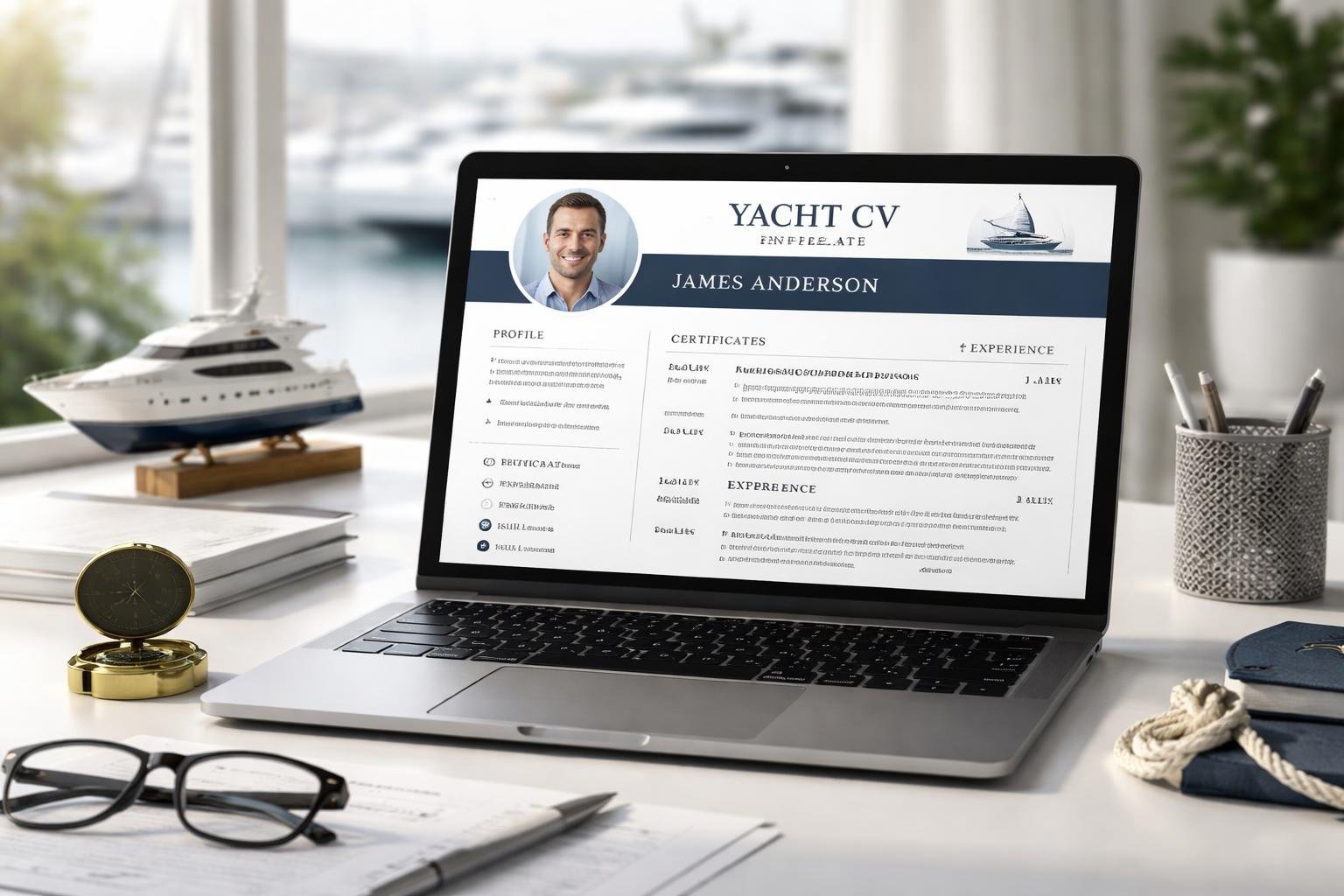
You can access a no-cost yacht CV layout in several simple ways.
If you prefer expert support, you can also have your CV professionally written as part of selected training programs.
- Request a free template by contacting an instructor directly.
- Enroll in Stewardess Training and receive a professionally written yacht CV along with the required qualifications for interior crew roles.
- Enroll in Deckhand Training and receive a tailored yacht CV prepared with your new certifications and ready to send to employers.
Are you starting to apply for yacht jobs, but have little to no success or doing it without the Best free Yacht CV Template ? You are not alone, the industry shows that 90% of CV recruiters and Captains get on board Yachts do not include key information needed to employ you as a Stewardess or Deckhand on board.
Here are a few things you must include on your free Yacht CV templates.
1. Include ENG1 Medical certificate on your Yacht CV templates ?
In your personal Details and Certificates, list your Medical Certificate as ENG1. It is the common name for the medical certificate in Yachting. But every employer knows that your Medical certificate is the equivalent to an ENG1. We can write your complete Yacht CV, making sure the right information is specified to stand out with the Best free Yacht CV Template.
You can find a list of Doctors to issue a Medical Certificate for Seafarers in that country, the same way you would be doing in your home country, you can also find Doctors abroad contacting us.
There is a misunderstanding in regards ENG1, since the regulatory standards in Yachting comes from the MCA which is the UK body their Version is ENG1. But a Medical certificate from another issuing country is just as valid and equivalent to an ENG1
2. Have a clear Yacht CV Photo


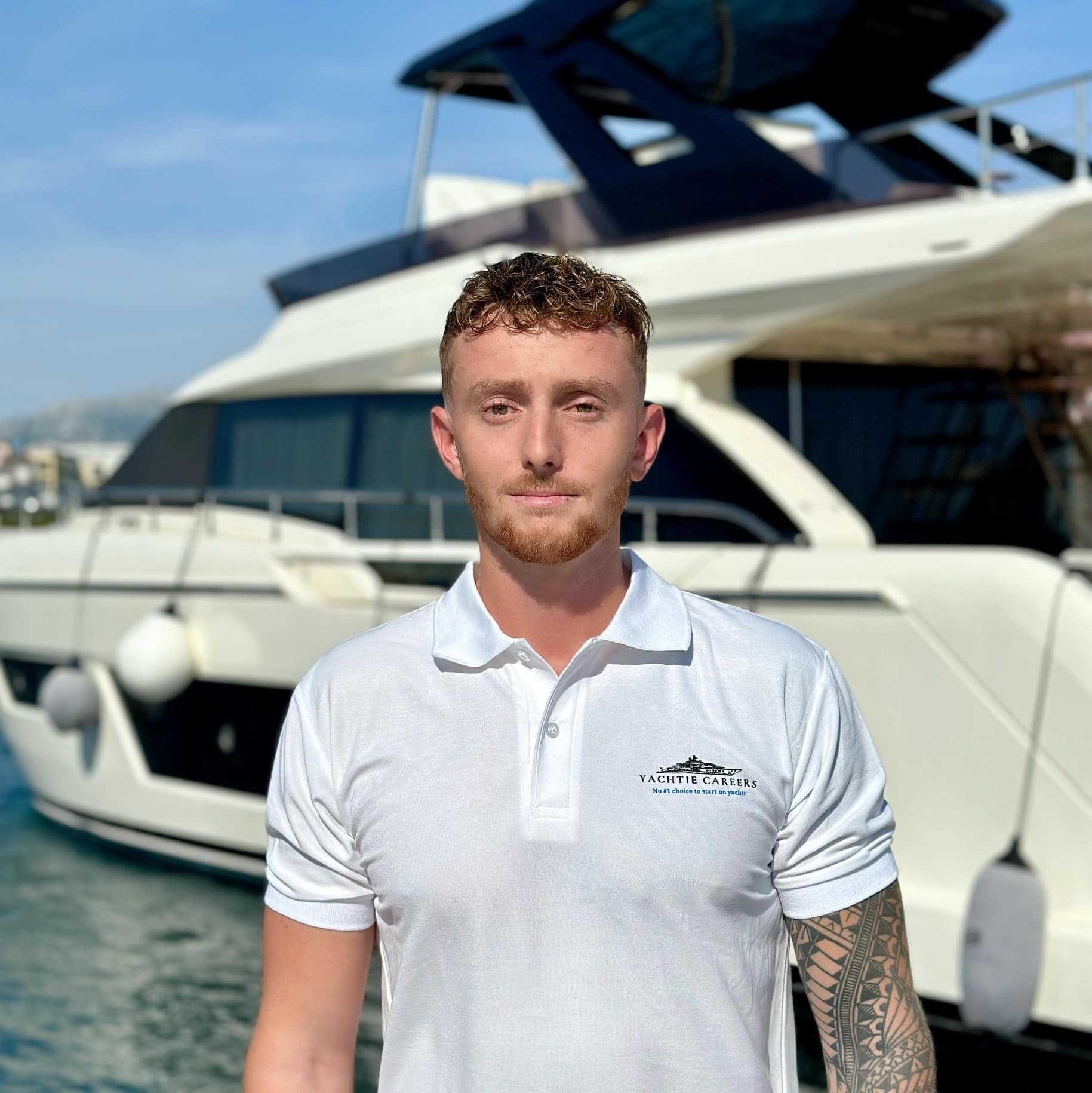
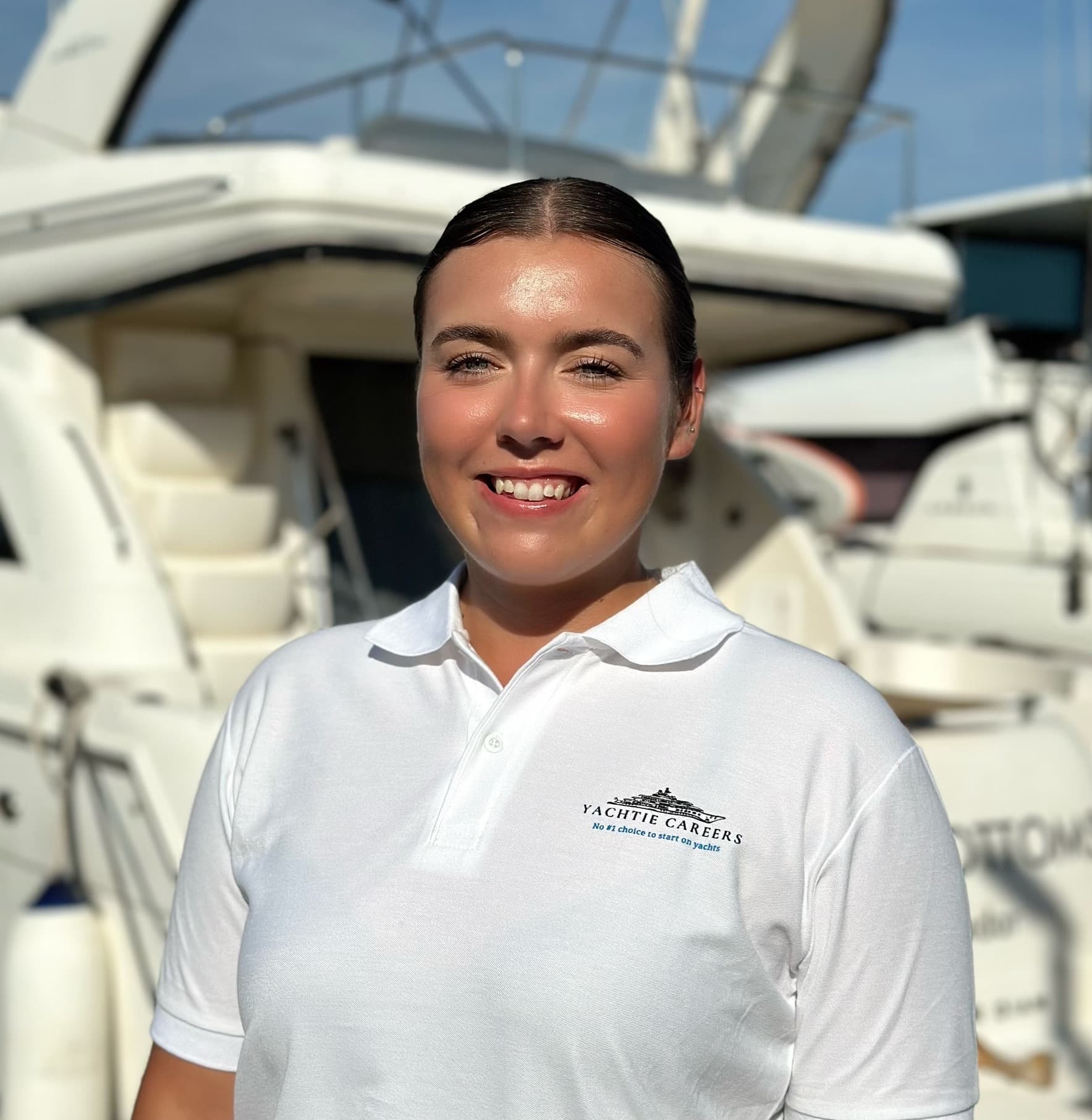
Remember to have a professionally taken clear CV photo, where you wear a uniform you would wear in your Stewardess or Deckhand role on board and add this to the photo sections on your free yacht cv template. The photo will be in the top left corner where it is most visible on the best free yacht CV template.
3. Add your new STCW Basic Safety Certificate and Qualifications to your Yacht CV template
Add your maritime qualifications on the first page, since you might not have much yacht experience when starting, it is important to highlight your Certifications and STCW Basic Safety Certificate.
If you do not have your STCW Basic Safety certificate, you can get it with us in a worldwide approved STCW Training Centre in Split Croatia.
The Basic Safety STCW training is an international standard for all yacht crew and the minimum safety certificate you need together with an ENG1 Medical Certificate. It includes 6 days of safety training covering all safety aspects to become qualified and to know the safety procedures for on board yacht crew.
4. How many Sections on the best Yacht CV template ?
We have selected and included the most important 11 sections that a Yacht CV template should have, that every yacht recruiter and employer is looking for when selecting new Deckhands and Stewardesses. So fill in the sections especially for:
- Experience
- Education
- References
- Skills
- Interestes
- Personal Summary and Objective
These are some of the most important sections that we have included when you are filling in your information on the Best free Yacht CV Template.
Download the Best free Yacht CV template
There are a few ways you can get access to our Free Yacht CV template. Remember that if you do need help filling it in we are happy to write the CV for you. This is included in our Superyacht Training packages for new crew, where we make a custom professional Yacht CV design for you and then write your CV from scratch.
- Get a free CV-template by contacting an Instructor here
- Book Stewardess Training and we write your Yacht CV and complete qualifications to work as a Yacht stewardess.
- Book Deckhand Training and we write your Yacht CV and send out to employers with all your new Qualifications