Every week we speak to Australians who want to work on superyachts and have no idea where to start. Most are researching for months and going in circles. The path is actually straightforward — but only if you do the steps in the right order.
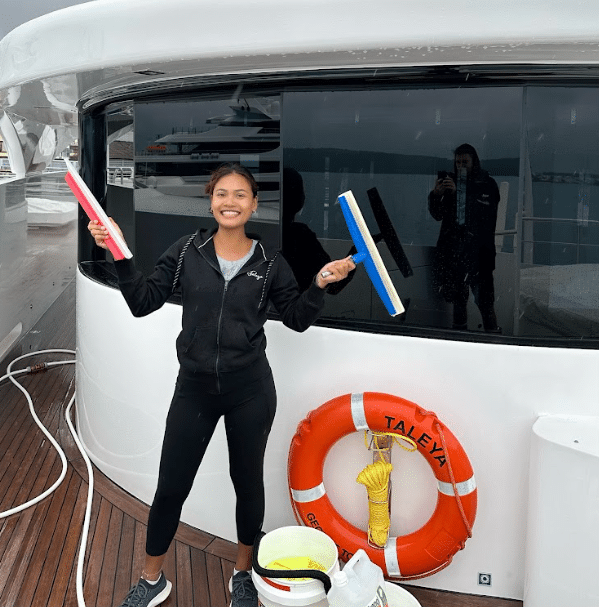
When applying for a deckhand job, don’t make the same errors other deckhands do. Here is how to become a yacht deckhand in Australia in just a matter of weeks with a 10 day training week.
Can Australians Work as Yacht Deckhands?
Absolutely. Australian crew are highly sought after on superyachts — the reputation for hard work, good English, and relaxed attitude makes Australian deckhands popular with captains. The main challenge is getting the right certifications and knowing where to find the work. The job of the deckhand involves many duties. But first of all, he/she will be in charge of ensuring that the exterior of the yacht is spotless and looks great at all times.
Some of the junior deckhand roles include:
- Painting
- Cleaning
- Sanding
- Varnishing
- Polishing
- Carpentry
- Line handling
Step 1 — STCW Basic Safety Certificate, ENG1 and Yacht Training
This is the first thing you need. No exceptions. Without STCW Basic Safety, no captain will consider you for any deckhand position on a commercial vessel over 24 metres.
STCW covers four mandatory modules: personal survival at sea, firefighting, first aid, and safety procedures. The course takes 5 days and the certificate is valid for 5 years worldwide.
AMSA — the Australian Maritime Safety Authority — recognises MCA-approved STCW certification. Most Australian crew do their STCW in Croatia or the UK where costs are lower, then work in the Mediterranean. Full STCW Australia guide here.
The foundation of your training may be a series of certificates like STCW, ENG1 medical certificate, and STCW PDSD (MCA approved). Full ENG1 guide here.
Step 2 — Build a Proper Yacht CV
A badly formatted CV gets deleted immediately. Captains receive hundreds of applications — yours needs to stand out in the first 10 seconds.
The most common mistake we see from Australian applicants: writing a standard job CV instead of a yacht-specific format. Captains want to see a photo, your certifications, physical fitness, languages, and any relevant experience — not a list of land-based jobs.
Use our free yacht CV template — it’s the format captains actually want and that is not generic.
Step 3 — Register With Crew Agencies, Dockwalk and Job Hunt
Register with at least 3 agencies the same week you receive your STCW certificate. The most active hiring happens through agencies — captains contact them first before posting publicly.
Best crew agencies for Australian crew to register with.
Step 4 — Go to Where the Yachts Are based.
This is where most Australian crew make the critical mistake. They complete their STCW in Australia, send applications online, and wait. The crew who find jobs in 4–8 weeks go to Palma de Mallorca, Antibes, or Split and walk the docks in person.
Airlie Beach and Sydney have some local opportunities, but the real volume of superyacht deckhand positions is in the Mediterranean — Palma, Antibes, Monaco, Split. If you’re serious about getting work quickly, go there. Full dockwalking guide here.
Where Australian and Kiwi Crew Actually Find Work in Europe
Australia and New Zealand produce some of the most sought-after crew in the superyacht industry. Captains consistently hire Australian and Kiwi crew for their work ethic, fluent English, and comfort with outdoor physical work. The demand is real — the challenge is simply knowing where to show up. Read our full guide on how to get a deckhand job on yachts for the complete breakdown. The Mediterranean is the world’s largest superyacht market. Between April and November, thousands of yachts are active across six countries. Here is where Australian crew concentrate their search:
- Croatia (Split, Dubrovnik) — the fastest-growing superyacht hub and where Yachtiecareers runs its superyacht deckhand training. Split is a practical base: low cost of living, direct access to captains, and a strong crew community. We also arrange accommodation in Split during STCW training so you arrive organised and ready. Many Australian crew complete training here and walk straight into job interviews the same week.
- Spain — Palma de Mallorca — the single busiest hub for crew placement in the Med. More superyachts winter in Palma than anywhere else. If you are in Europe and serious about finding a deckhand job, Palma is the first place to go.
- France — Antibes and Monaco — home to the largest yachts in the world. Junior deckhand positions on 50m+ yachts are common here during summer. The Antibes crew dock is one of the best dockwalking locations in Europe.
- Italy — Amalfi Coast, Sardinia, Sicily — peak charter season in July and August. Captains hire last-minute crew here more than anywhere else in the Med.
- Greece — Mykonos, Corfu, Athens — expanding fast. Greece now rivals Croatia for volume of charter yachts and the demand for entry-level crew has increased significantly over the last two seasons.
- Turkey — Bodrum, Marmaris, Göcek — underrated by Australian crew and less competitive as a result. Turkish ports have a strong superyacht presence and are worth targeting if the main hubs feel saturated.
Jack placed three Australian deckhands in Palma within two weeks of their STCW completion last season. Josh has had students get offers in Split before they even finished the training week. See the STCW training Australia guide for full certification details before you book.
The Med to Caribbean Transition — Year-Round Income for Australian Crew
Most Australian crew do not realise that superyacht work is a year-round income. The Mediterranean season runs April to October. When it ends, the fleet moves west — and so do the jobs. From November through April, the Caribbean becomes the centre of the superyacht world. Fort Lauderdale in Florida is the transit hub — yachts reposition there after the Med season before heading to Antigua, St. Maarten, the British Virgin Islands, Grenada, and the Bahamas. The pattern for Australian crew who do this properly:
- April–October: Mediterranean contract — Croatia, Mallorca, Antibes, Greece
- November–April: Caribbean contract — Fort Lauderdale, Antigua, BVI, Grenada
- Result: 10–12 months of paid work per year, tax-free, with all accommodation and food covered on board
Junior deckhands typically earn €2,000–€2,800 per month tax-free with all food and accommodation covered. Working both seasons, Australian crew consistently out-earn what they would make at home in land-based roles — while spending almost nothing on living costs. For visa requirements when working between Europe and the US, see our complete guide to yacht crew visas.
Getting from Australia to Europe: Cheaper Than You Think
The most common reason Australian crew delay starting is the cost of the flight to Europe. Here is the reality of what it actually costs and how to do it properly.
The cheapest routes from Australia to Europe:
- Sydney or Melbourne → Doha → Split or Barcelona via Qatar Airways — consistently the best value from eastern Australia
- Sydney or Perth → Dubai → any European hub via Emirates — strong from Perth
- Brisbane or Sydney → Singapore → Barcelona or Zurich via Singapore Airlines — good alternative
What you will pay: One-way flights from Sydney to Split or Palma cost AUD $1,400–$2,200 booked 6–10 weeks in advance. Book one-way — you will not know when your first contract ends, and return tickets rarely save money for crew on short-term contracts.
Why flying directly to your training location makes sense: If you are completing deckhand STCW training in Split, fly direct to Split. You spend the first 10 days in training, then you are already in the Mediterranean with your certificates in hand. Students who stay in Split after training and start dockwalking consistently find work faster than those who fly home and apply online. Accommodation in Split during training is included in our full training package.
Cost of living while job searching: Split is one of the cheapest cities in the Mediterranean. Shared crew accommodation runs €400–€600 per month. Once you are on a yacht, everything is covered. The upfront investment is your flight and your deckhand training package — after that, your first month’s salary covers both.
Starting Your Job Search Immediately After Training
The crew who find work fastest are not the most experienced. They are the ones who start their job search the moment their STCW certificate is in their hand. Before any of this, make sure your yacht CV is formatted correctly — captains delete badly formatted CVs in under 10 seconds. Here is what the first week after training should look like:
- Day 1: Upload your completed certifications to your crew profiles on Find a Crew, Crewseekers and YachtieWorld. Register with at least two crew agencies — Quay Crew and Luxury Yacht Group are strong for entry-level deckhand placements.
- Day 2–3: Start dockwalking. Go to the marina before 9am, ask permission to come aboard when you see crew working on deck, hand over a printed one-page CV with your photo. In Palma this means the Club de Mar. In Split this means ACI Marina.
- Day 4–7: Follow up with agencies by phone, not just email. Australian crew are consistently noticed by agencies because they call — most applicants only email.
- Week 2–4: Expand your search geographically. If Split has not produced results, take a bus to Dubrovnik or fly to Palma for a week. The budget to do this is low — crew hostels in Palma run €25–€35 per night.
Check the full yacht crew certifications guide to make sure you have everything you need before you start applications. Drazen’s rule for Australian crew: if you have your STCW, your ENG1, and you are physically in the Med — you will find a deckhand job. The only crew who do not find work are the ones who go home to wait.
What Does a Yacht Deckhand Actually Do?
Junior deckhands handle deck maintenance, cleaning, line handling, tender driving, water sports equipment, and assisting the bosun. The work is physical, outdoors, and 7 days a week during charter season.
Jack and Josh, our bosun instructors, both started as junior deckhands. Jack’s first contract was on a 45m yacht in Croatia — he got the job through dockwalking 3 weeks after completing STCW. Josh found his first position through a crew agency 6 weeks after training.
To begin with, long hours on board and the need to stay mentally focused are a big challenge you’ll face.
You have to have a personal interest in delivering the good quality of each required job. Plan on working during the day, nights, weekends, and holidays, and be ready to visit different destinations within the country and possibly beyond. Generally, your working hours will be long, starting early and ending late, hence, you are expected to be very energetic and physically fit.
How Much Do Australian Yacht Deckhands Earn?
- Junior Deckhand: €2,000–€2,800/month + tips + free accommodation and food
- Deckhand: €2,800–€3,500/month
- Bosun: €3,500–€5,000/month
All earnings are typically tax-free when working on foreign-flagged vessels. Full deckhand salary guide here.
Common Mistakes Australian Crew Make
- Waiting to feel ready — there is never a perfect time. Book STCW and start.
- Staying in Australia — the Mediterranean is where 80% of superyacht deckhand jobs are. Go there.
- Applying only online — dockwalking gets results 3x faster than online applications alone.
- Wrong CV format — a land-based CV format will get you deleted immediately.
How Long Does It Take to Get a Yacht Job from Australia?
- Week 1–2: Complete STCW
- Week 2–3: ENG1/AMSA medical, CV, agency registration
- Week 3–8: Dockwalk in Mediterranean or apply online from a yachting hub
- Average: 6–10 weeks for crew who follow all steps
Ready to Start?
- Superyacht Deckhand Training — full package
- STCW Basic Safety — what’s included
- Complete deckhand job guide
This guide is written by Drazen, our Chief Officer instructor with 10 years on 100m superyachts, and Jack and Josh, our bosun instructors who have placed Australian crew on yachts across the Mediterranean and Caribbean.
Questions before booking — contact us. Our team responds within 24 hours.
Deckhands remain the industry’s backbone within the superyacht sector. They are responsible for maintaining the world’s most privileged yachts. Here are 9 steps to get into this:
Yacht Deckhand Online Training
Also consider the online (Yacht Crew Academy) Yacht Deckhand training courses. They have everything you need to be a competent working yacht deckhand.
- YCA Yacht Anchoring
- YCA Mooring, Knots, Navigation
- YCA Teak Maintenance
- YCA Guest Safety Training
- YCA Wash down Training
- YCA Detailing & Products
- YCA On board Jet Ski Procedures
- YCA Tenders & Water toys
- YCA Superyacht Working Aloft
To be successful as a superyacht deckhand, it is necessary for the candidate to go through a wide-ranging training program that covers the entire job role.
Start from Australia to get deckhand STCW Qualifications? With an all-inclusive, comprehensive training package, you will be able to secure your career in the superyacht industry in a few weeks, not months.
Tip for Beginners in Australia
STCW or Security Training Certificates of Watch-keeping are required for most Deckhands. But in addition to that gaining some practical experience at sea is quite advising. At Yachtiecareers, you can develop your deck crew expertise, which is a great step towards advancement and formal training.
To start, the best is an all inclusive yacht training package with STCW, ENG1 and everything covered to start working on yachts.
To become a Yacht Stewardess you can select an all inclusive tailor made Superyacht training package here, Yacht Stewardess Training
To become a Yacht Deckhand and get all STCW Basic Safety Training, Visas, Yacht CV and Seaman’s Discharge book you can book your training here to start earning a yacht crew salary you can see options here. Yacht Deckhand Training