Most “travel and work” articles are written by bloggers recommending you teach English in Thailand for $800 a month and call it a career. This is a different list.
These are 10 real jobs that genuinely let you travel the world, ranked by earning potential, with real salary figures and the actual steps to get each one. Some are entry-level. Some require qualifications. One of them can take a complete beginner from zero to their first paid contract in under two weeks — and it pays better than most office jobs.

1. Superyacht Crew
Salary: $2,500–$10,000+/month + $500–$2,000/week in charter tips
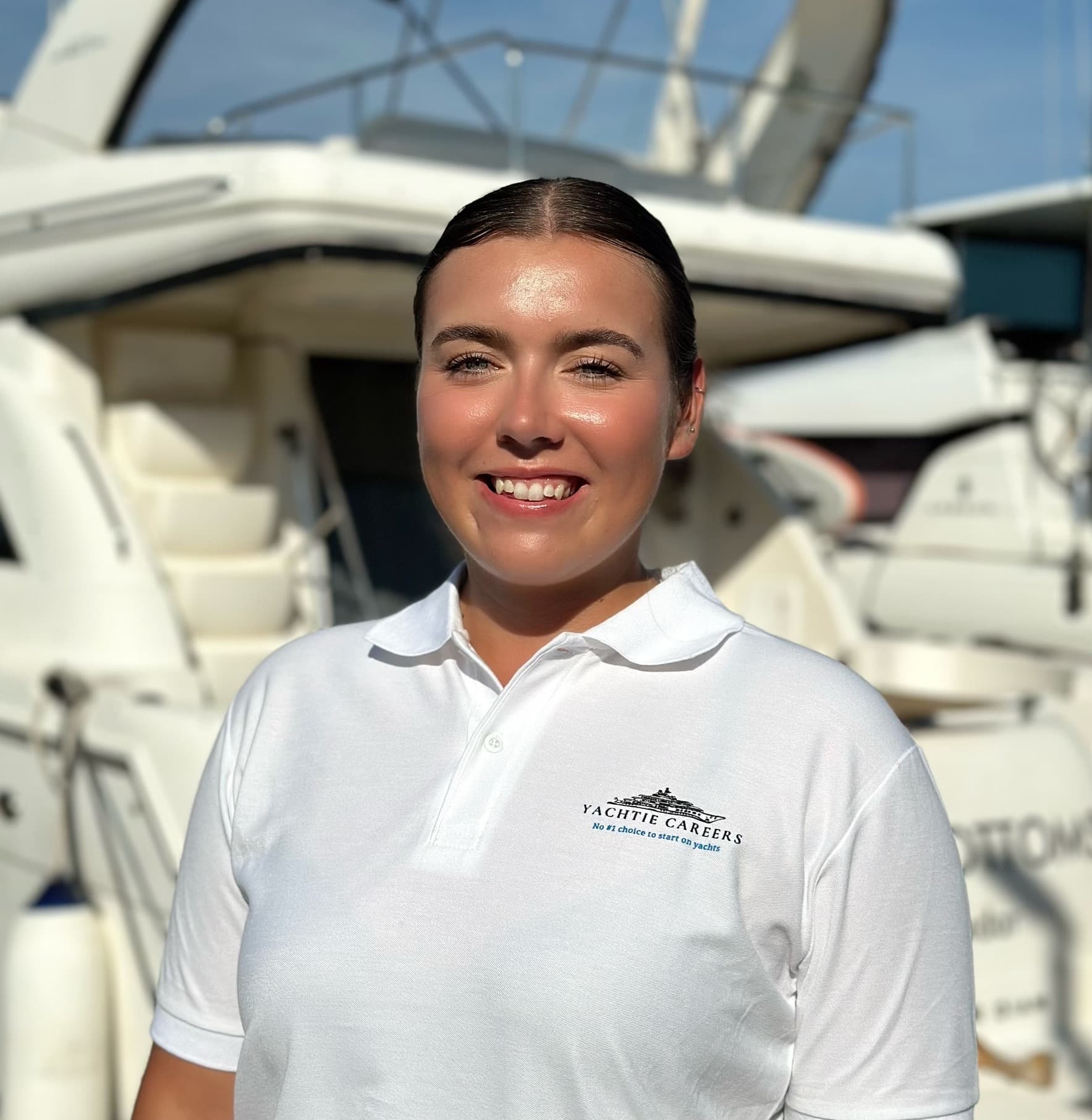
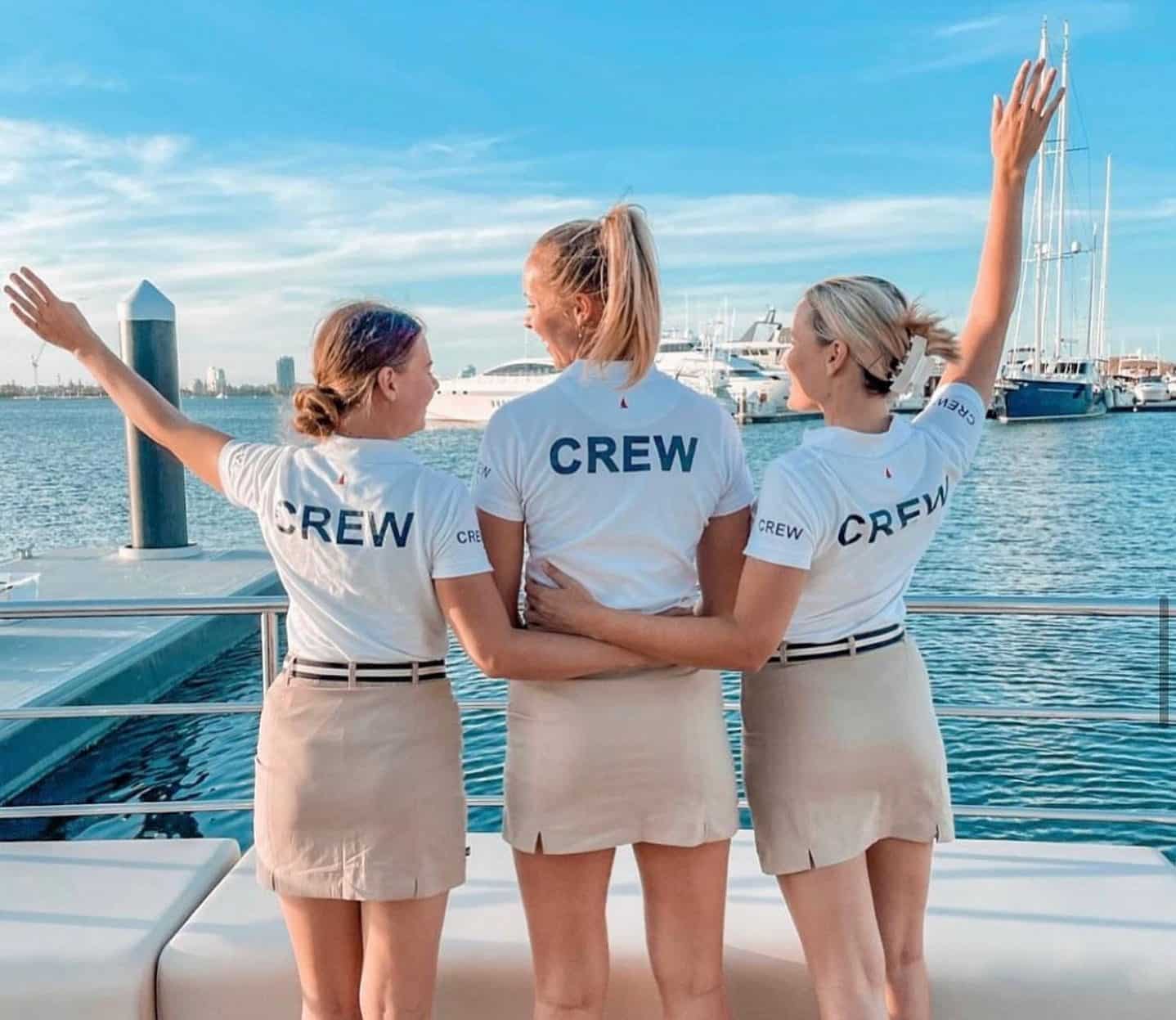
This is the best-paying travel job most people have never considered. Superyacht crew get paid to live and work on private luxury vessels — visiting the Amalfi Coast, the Greek islands, the Caribbean, and everywhere in between. You’re not a tourist. You’re employed, fully accommodated, and earning while you travel.
The two main entry-level roles are deckhand (deck and exterior maintenance, water sports, tenders) and stewardess (interior service, housekeeping, guest experience). Neither requires prior maritime experience. What you need is the right training and certifications.
What You Earn
- Junior Deckhand / Third Stew: $2,500–$3,500/month base
- Mid-level crew: $3,500–$5,000/month base
- Senior roles (Bosun, Chief Stew): $5,000–$10,000+/month
- Charter tips: $500–$2,000 per person per charter week — paid in cash
In a busy Mediterranean charter season, tips alone can add $4,000–$8,000/month on top of your salary. All accommodation, food, and travel costs are covered by the yacht. Your entire salary is effectively disposable income.
See the full yacht crew salary breakdown for every role.
Where You’ll Go
Med season runs April to October — Croatia, Italy, Greece, France, Monaco, Spain. Caribbean season runs November to April — St Barts, Antigua, the BVIs, the Bahamas. Most crew do both. You’ll visit places the standard tourist routes don’t reach — private anchorages, exclusive ports, off-grid coastlines.

How to Get Started
- Complete STCW Basic Safety Training — mandatory for all commercial vessel crew
- Get your ENG1 medical certificate
- Complete role-specific training (stewardess or deckhand)
- Build a professional yachting CV and register with crew agencies
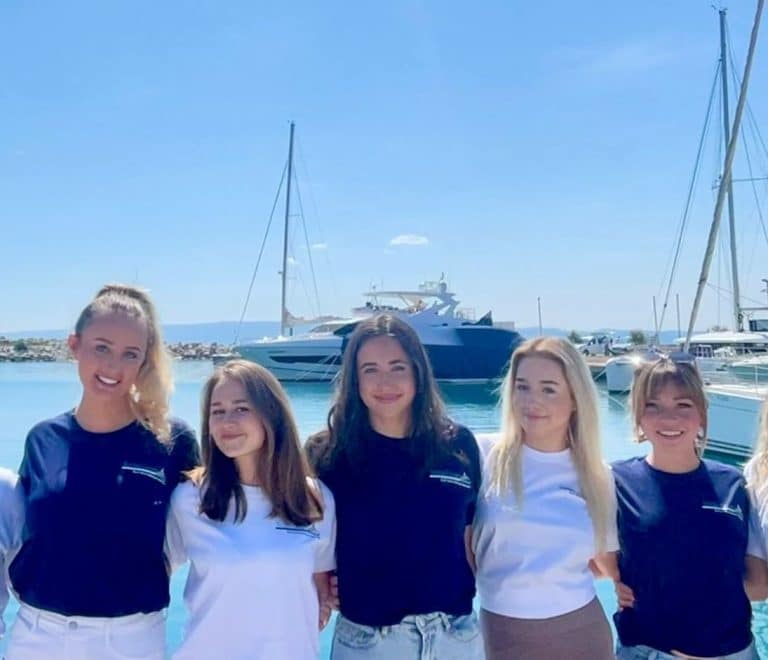
At Yachtiecareers, we run a 10-day all-inclusive training programme in Split, Croatia where you complete every required certificate, train on a real yacht, and get direct job search support from active Chief Officers, Bosuns, and Chief Stewardesses. Most students start their job search before they leave Split. View stewardess packages or deckhand packages, or book a free call with our team.
What Happens After Two Weeks of Training
Kim Homburg from the Netherlands landed her first yacht job before the training programme even finished. Maura arrived in Split with no superyacht experience and left with two stewardess job offers during the training week — she went straight onto a 70m superyacht. Fredrik Fiskerstrand made the switch from cruise ships, had two deckhand role offers in his first week after training, and now works on an 86m MY.
These aren’t outliers. When you arrive in Split with every certificate completed, a professionally written CV, and dock walking skills taught by active Chief Stewardesses and Chief Officers — the industry finds you faster than you expect.
“Could not have wished for anything better. During this program we were guided from start to finish, which led me to landing my first job before the program even finished.”
— Kim Homburg, Netherlands ★★★★★
Best for: People who want to maximise earnings while travelling, thrive in a small team, and want fast career progression.
2. Cruise Ship Crew
Salary: $1,200–$4,000/month depending on role
Cruise ships offer a more structured, corporate version of working at sea. You’ll visit major ports on fixed routes — Mediterranean, Caribbean, Northern Europe — as part of a crew of 500–2,000 people. Entry-level positions include housekeeping, food and beverage, deck crew, and entertainment.
The pay is lower than superyachts and tips are pooled across hundreds of crew. Contracts are longer (6–9 months) and the environment is more regimented. It suits people who prefer large company structure over the close-knit, high-earning superyacht model.
How to get in: Apply directly to cruise lines (Royal Caribbean, MSC, Norwegian, Princess). STCW Basic Safety is required. Most lines recruit through agencies.
Already working on cruise ships? You’re closer than you think. The core hospitality and seamanship skills transfer — what’s missing is the STCW certification and a CV repositioned for private yachts. Read our full guide on switching from cruise ships to superyachts.
Best for: People who want job security, company benefits, and a structured corporate environment at sea.

3. Flight Attendant / Cabin Crew
Salary: $25,000–$60,000/year depending on airline and seniority
Cabin crew for major international airlines travel to dozens of countries per year. Long-haul routes mean layovers in cities across Asia, the Americas, the Middle East, and Europe — often with 24–48 hours in destination before the return flight.
Competition for positions at major airlines (Emirates, Qatar Airways, British Airways) is significant. Entry requirements vary but typically include a minimum height, language skills, and a customer service background. Training is paid and provided by the airline.
How to get in: Apply directly to airlines during open recruitment periods. Requirements vary significantly by carrier.
Best for: People who want to travel frequently with stable employment, good benefits, and don’t mind irregular schedules.
4. Dive Instructor
Salary: $1,500–$4,000/month (highly location-dependent)
PADI or SSI dive instructors work at resorts, liveaboard dive boats, and dive centres across the world’s best dive destinations — Thailand, Indonesia, the Maldives, Australia’s Great Barrier Reef, the Red Sea, the Caribbean. You teach beginners and guide certified divers on dives.
Earnings vary widely. Resort instructors in Southeast Asia earn less but have low costs. Liveaboard instructors earn more and travel continuously. Getting qualified costs $1,000–$3,000 and takes 6–12 months from beginner diver to instructor.
How to get in: Start with Open Water, progress to Divemaster, then PADI Instructor Development Course (IDC). Total investment: 1–2 years.
Best for: Diving enthusiasts willing to invest in certification for a lifestyle job in tropical locations.
5. Ski / Snowboard Instructor
Salary: $1,500–$3,500/month in season + accommodation often included
Qualified ski and snowboard instructors work winter seasons in the Alps, North America, Japan, New Zealand, and South America. Accommodation is typically included or subsidised, and lift passes come with the job. Many instructors do southern hemisphere summers to ski year-round.
Qualifications (BASI, CSIA, PSIA) take 1–4 weeks of intensive training. Entry-level instructor courses cost $2,000–$4,000.
How to get in: Complete a recognised instructor qualification during an off-season course, then apply to ski schools in your target resort.
Best for: Skiing and snowboarding enthusiasts who want to turn their sport into a paid seasonal career.
6. Travel Nurse / Healthcare Abroad
Salary: $40,000–$100,000+/year depending on specialty and location
Qualified nurses, doctors, and allied health professionals can work internationally through agencies that place staff in hospitals and clinics across the Middle East, Australia, Canada, the US, and Europe. MSF (Médecins Sans Frontières) places medical professionals in field missions in 70+ countries.
Requirements: recognised medical qualification, registration in target country, often 2+ years post-qualification experience. The pay and working conditions vary significantly by location and employer.
How to get in: Register with international healthcare recruitment agencies, or apply directly to organisations like MSF, IMC, or International SOS.
Best for: Qualified healthcare professionals who want to combine their career with international experience.
7. English Teacher Abroad (TEFL)
Salary: $800–$3,000/month (highly variable by country)
Teaching English as a Foreign Language (TEFL) is one of the most accessible ways to live abroad long-term. Demand exists across Asia, the Middle East, South America, and Eastern Europe. South Korea, Japan, and the UAE pay significantly better than Southeast Asia or Latin America.
A TEFL certificate (100 hours minimum) is the basic qualification. A teaching degree or DELTA/CELTA dramatically improves earning potential and access to better-paying positions.
How to get in: Complete a recognised TEFL course (online or in-country). Apply through placement agencies or directly to schools and language centres.
Best for: People who want to live in one place for 1–2 years, immerse in a culture, and have a stable base abroad.
8. Tour Guide / Expedition Leader
Salary: $1,500–$4,000/month in season + tips
Tour guides and expedition leaders operate in adventure travel, cultural tourism, and wilderness expeditions globally. Responsible for group safety, itinerary delivery, and guest experience. Positions available with overland tour companies, polar expedition vessels, trekking companies, and wildlife safari operators.
Requirements vary by sector. Polar expedition guides need wilderness first aid and relevant technical skills. Cultural guides need deep local knowledge and often a guide licence for the relevant country or site.
How to get in: Start locally, build relevant certifications, and apply to international operators once you have documented experience.
Best for: People with deep knowledge or skills in a specific environment — wilderness, culture, wildlife, adventure sports.
9. Remote Worker / Digital Nomad
Salary: Depends entirely on your existing role and employer
Remote work has opened up location-independent options across software, design, marketing, finance, writing, and customer service. Digital nomads work online while travelling — often slower travel, spending months in one country at a time rather than moving constantly.
This isn’t a “travel job” in the traditional sense — it’s your existing job, done from somewhere else. The challenges are practical: visa restrictions, tax implications, time zone management, and the fact that many remote-friendly roles still have geographic limitations in employment law.
How to get in: Negotiate remote status with your current employer or apply for remote-first companies. Platforms like Remote.com and Deel make cross-border employment more manageable.
Best for: People already in skilled digital roles who want location flexibility rather than a career change.
10. Au Pair
Salary: €200–€1,000/month (pocket money) + full room, board, language classes
Au pairs live with host families abroad and provide childcare in exchange for accommodation, meals, and a weekly allowance. Popular destinations include France, Germany, Spain, Italy, the US, and Australia. Cultural exchange programmes make the visa process manageable for many nationalities.
The income is low but all costs are covered and the experience of living with a local family in another country is genuinely different from other travel options. Most placements run 6–12 months.
How to get in: Register with au pair agencies (AuPairWorld, Cultural Care, Au Pair in America) and apply to host families directly.
Best for: People early in their travel career who want a structured introduction to living abroad, especially in Europe.
Start Your Superyacht Career
10 days in Split, Croatia. Every certificate. Hands-on training on a real yacht. Job search support from active superyacht crew.
Which Travel Job Is Right for You?
| Job | Entry barrier | Earning potential | Lifestyle rating |
|---|---|---|---|
| Superyacht Crew | Low (2 weeks training) | ★★★★★ | ★★★★★ |
| Cruise Ship Crew | Low | ★★★ | ★★★ |
| Flight Attendant | Medium (competitive) | ★★★ | ★★★★ |
| Dive Instructor | Medium (1–2 years) | ★★ | ★★★★ |
| Ski Instructor | Medium | ★★ | ★★★★ |
| Travel Nurse | High (degree + registration) | ★★★★★ | ★★★ |
| TEFL Teacher | Low–Medium | ★★ | ★★★ |
| Tour Guide | Medium | ★★★ | ★★★★ |
| Remote Worker | Depends on existing skills | ★★★★ | ★★★ |
| Au Pair | Very low | ★ | ★★ |
| Working Holiday | Very low | ★★ | ★★★ |
| NGO Worker | High (experience needed) | ★★★ | ★★ |
If you want the best combination of low entry barrier, high earnings, and genuine travel — superyacht crew is the answer. No other job on this list lets a complete beginner qualify in two weeks and immediately earn $3,000+/month while living on a private yacht in the Mediterranean.
Read our guide on how to get a yacht crew job to understand the full path, check the salary guide to see what each role pays, and book a free call with our team if you want to talk through whether this is the right move for you.