The most common thing people say when they first contact us is some version of: “I know nothing about boats — is that actually okay?” Yes. That is the normal starting point. The superyacht industry hires thousands of new crew every year who have never worked at sea, never served on a yacht, and sometimes never even been on one. What the industry does not do is hire uncertified people. That’s the distinction that matters. Experience on a boat is not the barrier — legal qualifications are. Get those, get your CV right, get to the right marina at the right time, and the fact that you’ve never polished teak or driven a tender in your life is not the obstacle you think it is. For the full path from zero to first contract, read our yacht crew job guide. For training in Split, Croatia, see our Deckhand and Stewardess Training Packages.
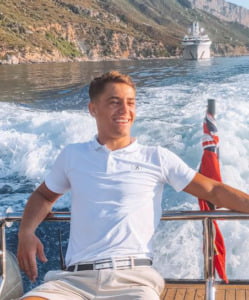
Why Superyachts Hire People With No Experience
This is worth explaining properly, because it surprises people. Superyachts are not hotels or airlines — they don’t have a permanent HR department maintaining a bench of experienced candidates. Each yacht is run as its own operation, with a small crew of 6–20 people depending on size, and captains typically hire based on who is physically present in the marina, who has their certificates done, and who makes a good first impression in person.
Because the industry moves fast and crew turnover is high — people leave after a season, progress to bigger boats, change roles, take breaks — there is constant demand for junior crew who can start immediately. Captains and bosuns are experienced at training people on the job. What they cannot do is take your certificates for you. That is your job before you arrive at the marina.
Drazen, our Chief Officer with 10 years on 100m superyachts, puts it directly: “A motivated person with zero experience and full certificates is far more useful to me than an overconfident person with some experience but no paper. I can teach someone how a line runs on this specific boat. I cannot make them certifiable overnight.” That framing holds across virtually every captain and bosun we work with. The certificates are the gatekeeping mechanism. Everything else is trainable.
The Two Entry-Level Roles
Junior Deckhand
The deck team manages everything outside the yacht — from mooring lines and anchor operations to tenders, watersports equipment, and deck maintenance. As a junior deckhand, you’re at the bottom of that team, learning from the bosun up. In practice that means washdowns every morning, setting up watersports equipment when guests are active, running the tender, helping with lines during arrivals and departures, and doing maintenance — varnishing, polishing, teak cleaning — during quieter periods.
It is physical work. Early starts, long days when guests are on board, less predictable hours than land-based work. The upside: progression is real and fast. A deckhand who works hard and takes the career seriously can be a bosun within two or three seasons. From bosun, the officer path opens. From there, captain. Very few industries offer that kind of trajectory from a no-experience starting point.
For the full deckhand-specific breakdown — certificates, job search strategy, what first-season roles involve — read our deckhand career guide.
Junior Stewardess / Steward
Interior crew run everything guests touch inside the yacht: cabins, saloon, dining, bar, service. On a superyacht, the standard is not hotel-level — it is above hotel-level, delivered for a maximum of 12 guests who have paid €100,000–€500,000 to charter the vessel for a week. The chief stewardess runs the interior department; junior stews operate under her direction.
In practice that means turndown service, table settings and fine dining service, cocktail preparation, cabin deep cleaning between guest changeovers, laundry, ironing, and everything that makes the interior run invisibly from the guests’ perspective. Attention to detail is not optional. A misaligned napkin or a smudge on a wine glass at formal service is noticed. But for people coming from hospitality — hotels, restaurants, event management — this is a natural environment. The standard is higher; the fundamentals are familiar.
For the stewardess-specific path — what certificates you need, how to write your CV for interior roles, what to say in your first marina conversations — read our stewardess career guide.
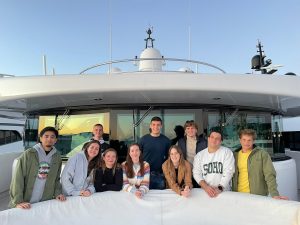
What You Need Before You Can Start Applying
These certificates are required for all commercial crew — deckhand or stewardess — before a captain can legally put you on a yacht:
STCW Basic Safety Training
The non-negotiable foundation. Four modules — firefighting, personal survival, elementary first aid, personal safety — completed over approximately 5 days at an MCA-approved training centre. No STCW, no commercial yacht work. Full stop. See our STCW guide for what each module involves and what to expect during training.
ENG1 Medical Certificate
A fitness assessment from an MCA-approved maritime doctor confirming you are medically fit to work at sea. Valid for 2 years under 40, 1 year over 40. Arrange this before or during your training week — it cannot be done retroactively and you cannot join a vessel without it.
PDSD — Personal Designated Security Duties
Required on most commercial superyachts. Typically completed as a 1-day addition alongside your STCW. If you’re doing a structured training programme, it will usually be included. If you’re piecing together certificates separately, make sure PDSD is on the list before you start applying.
Crowd and Crisis Management
Required for crew on vessels certified to carry more than 12 guests — which covers virtually every charter superyacht. Another 1-day course. Complete it at the same time as your STCW rather than booking separately later.
Food and Beverage Hygiene
Required on all commercially operated yachts. A 1-day course, straightforward, but non-negotiable for interior crew in particular. Again — do it alongside everything else in one programme.
The practical advice: complete all five in a single all-inclusive programme. Booking them separately across different providers, different cities, and different weeks costs more in both time and money, and leaves you in job-search limbo between completions. A 10-day all-inclusive programme in a Med location like Split gets you every certificate, a complete CV, and the ability to start your job search from a marina hub — all in one trip. Our Deckhand and Stewardess Packages are built exactly for this.
The Honest Job Search — What Actually Works
Dock Walking Is Still the Primary Method
The majority of first-season deckhand and stewardess positions are never posted online. They’re filled by whoever is physically at the marina when the need arises. Dock walking — showing up at the marina with your CV, approaching boats, introducing yourself to captains and bosuns — is still how most no-experience crew land their first contract.
The key marinas for the Med season (April–October): Antibes, Palma de Mallorca, Monaco, Cannes, Genoa. For the Caribbean season (November–April): Fort Lauderdale, Antigua, St. Martin. Antibes is the single most effective location for first-time job seekers — the Port Vauban marina houses hundreds of superyachts, and April to early June is when most are crewing up for summer. Read our complete dock walking guide for exactly how to approach it, what to say, and how to follow up.

Crew Agencies — Register With All of Them
Once your certificates are complete, register with every major crew agency: Palma Crew, Wilsonhalligan, Faststream, Quay Crew, YachtRecruit, Crew Network. These agencies place junior crew on active yachts and represent both charter and private vessels. Keep your profiles current, upload your certificates as soon as they’re done, and respond quickly when a position comes up — junior roles move fast.
Online Boards — Useful for Market Intelligence
YachtRecruit, Dockwalk, Luxury Yacht Group, Boatjobs, and CrewSeekers list positions. For no-experience candidates, these boards are more useful as a research tool than as a direct application source. Use them to understand what’s being asked for, what boats are in what locations, and what the current pay rates look like. Most first jobs come from dock walking or a referral — online applications supplement that, not replace it. See our salary guide for what first-season crew earn.
What Your CV Needs to Look Like
A yacht crew CV has a specific format that is nothing like a standard employment CV. Photo (professional, clean background, not a selfie), personal statement written specifically for yachting, certificates listed clearly with dates, relevant experience (even if it’s hospitality, sport, military, or outdoor work — not maritime), references. A CV that doesn’t follow this format signals immediately that you haven’t done the research. It gets set aside before anyone reads it.
For no-experience candidates, your job is to make the non-yachting experience you do have read as relevant as possible. Hospitality background shows you understand service and can handle difficult guests. Military or sports background shows physical discipline and the ability to work in a team under pressure. Outdoor work shows comfort with physical environments. Nothing about your CV needs to lie or overstate — but everything should be framed in terms of what’s relevant to life on a boat.
Real People, Real First Jobs
Nashaly Madera from the US completed her training and was working as a stewardess on a 130ft MY in Key West, Florida three weeks after finishing her certificates. Georgia Barlow from the UK completed training in February and described what could have been an overwhelming process as “seamless and exciting” — within weeks she was in the job market with a CV that worked and a clear plan of action. Emma Davis from the UK walked into training “not knowing where to begin” and left with the practical skills, CV, and dock walking preparation to start applying immediately.
None of these outcomes required prior experience on a boat. They required preparation: the right certificates, the right CV, and the right approach from a location where the boats actually are.

“I walked in not knowing where to begin and left feeling prepared and motivated. They really set you up with everything you need to confidently start job hunting — CV guidance, dock walking prep, interview tips, and real insight into how the industry works. If you’re thinking about getting into yachting, this is 100% the place to start.”
— Emma Davis, United Kingdom ★★★★★
From Zero to Job-Ready in 10 Days
Split, Croatia. STCW, ENG1, PDSD, Crowd Management, Food Hygiene — all MCA-accepted, all in one programme. Plus CV writing, dock walking prep, and job search support from active superyacht crew with years of real industry experience.
Premium Package from €2,940 — 7 nights accommodation, 1-1 CV writing, reference letter, 1 year unlimited career support.
How Long Does It Take to Get Your First Job?
With full certificates, a professional CV, and the right timing at a marina, most prepared candidates find their first position within 2–4 weeks of active dock walking. The timing variable matters more than most people expect. Arriving in Antibes in April when yachts are crewing up for summer is a fundamentally different situation from arriving in August when boats are fully staffed mid-season, or in October when they’re preparing to leave for the Caribbean. Plan your certificate completion so you arrive in the right place at the right time — not just wherever the training happens to finish.
Some graduates receive offers before their training programme even ends. Several Yachtiecareers students have been in conversations with captains from marina locations during their training week and had contract discussions underway before they flew home.
The Mistakes That Delay First-Season Crew
These are the patterns we see from people who contact us frustrated that the job search is taking too long:
- Starting the job search before finishing certificates. Captains will not engage seriously with an uncertified candidate. Every approach you make before your STCW is done potentially burns an introduction that would have been useful once you were qualified.
- Wrong location at the wrong time. Job searching in the UK in January, or online from home, is not how this industry works. You need to be at a marina where the boats are, during the hiring window for that season.
- Using a generic CV. A CV that doesn’t follow the yacht crew format — no photo, no clear certificate section, unclear personal statement — gets set aside before the reading starts. The format signals whether you’ve done the preparation.
- Only applying online. Online applications are a supplement to dock walking. They are not the primary path. The person who gets the first-season position is typically the one standing on the dock.
- Giving up after a few days. Dock walking takes persistence. Most first-season crew don’t land a position in the first three days. The ones who break through commit 2–3 weeks to the marina, follow up consistently, and keep their visibility high. Persistence is part of the qualification.