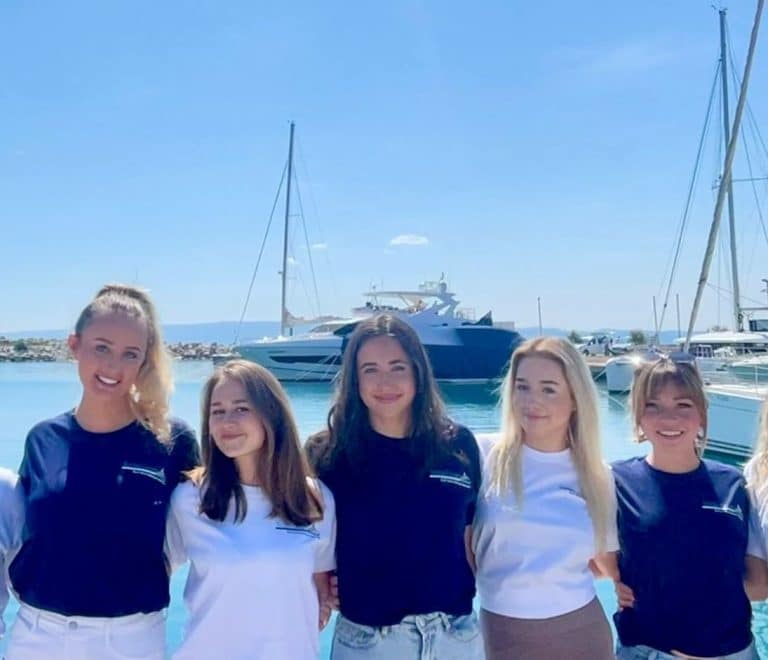
Every week someone contacts us with a version of the same question: “I have no yachting experience, no sailing background, nothing — can I still get a deckhand job?” Yes. That’s the whole point of how this industry is designed to work. Superyachts don’t hire experienced crew out of thin air — they hire people with the right certificates and the right approach, and then they train them on the job. The certificate stack exists precisely because entry-level crew are expected to arrive without experience. Your job before you walk onto a marina is to get qualified, build a strong CV, and show up where the boats are. Everything else comes from being on a boat. For the full qualification overview, read our STCW guide for yacht crew. For an all-inclusive programme that takes you from zero to job-ready, see our Deckhand Training Package.

Why “No Experience” Is Not the Problem You Think It Is
The superyacht industry is structurally set up for people entering without experience. Every year, hundreds of first-season deckhands join boats having never set foot on a superyacht before. Captains and bosuns know this. They’re not expecting you to arrive knowing how to run lines on a 50m vessel — they’re expecting you to arrive with the right paper, a professional attitude, and the willingness to learn fast.
What they are not willing to do is hire someone uncertified. The STCW, ENG1, and PDSD certificates exist as the industry’s way of establishing a baseline before they invest time in training you on the job. Get those done first, and “no experience” stops being the barrier and becomes simply the starting point.
Jack and Josh, our Bosun instructors who have hired first-season crew on working yachts, are consistent on this: the deckhands who landed jobs in their first season were not the ones with the most relevant background. They were the ones who showed up fully qualified, in the right place, with the right approach. Background was secondary to preparation every time.
What Qualifications You Actually Need
These are the certificates every deckhand needs before they start applying:

STCW Basic Safety Training
The mandatory foundation for anyone working commercially at sea. Covers fire fighting, personal survival, elementary first aid, and personal safety. Takes approximately 5 days at an MCA-approved training centre. Without this certificate, you cannot legally work as paid crew — it is the non-negotiable starting point for every deckhand career. Read the full breakdown in our STCW guide.
ENG1 Medical Certificate
The seafarers’ fitness certificate that confirms you are medically fit to work at sea. Issued by an MCA-approved maritime doctor. Valid for 2 years if you’re under 40, 1 year if you’re 40 or over. Without a valid ENG1, you cannot work on a commercial vessel — it’s a hard requirement, not an optional extra.
PDSD — Personal Designated Security Duties
Required on most commercial superyachts, particularly those operating under commercial charter. Typically a 1-day add-on to your STCW programme. If you complete it alongside your STCW, you leave with everything you need — rather than having to come back for it later. See our full PDSD guide for what it covers.
Crowd and Crisis Management
Required for crew on vessels certified to carry more than 12 passengers — which covers the vast majority of charter superyachts. Another 1-day addition that is best completed alongside STCW rather than separately.
Food and Beverage Hygiene
Required on most commercially operated yachts. A straightforward 1-day course that is often grouped into all-inclusive training packages. Worth completing before you start — not after you’ve already been on a boat for a season without it.
The fastest and most cost-effective approach is to complete all five in a single programme. Doing them separately across multiple providers and dates costs more time, more money, and produces gaps between certifications that delay your job search. Our Deckhand Training Package covers all of these in one 10-day programme in Split.
The Certificates That Give You an Edge (But Aren’t Mandatory)
Once you have the basics, these add genuine value without being legally required for junior positions:
- RYA Powerboat Level 2: Operating tenders is a core deckhand task. Showing up able to drive a tender is an immediate practical asset. Many captains will specifically ask about it during dock walking conversations.
- VHF Radio Licence (SRC): A 1-day course that shows you can operate the radio — standard communication equipment on every yacht. Low cost, high signal value for first-season applications.
- Day Skipper (RYA or similar): Not required for junior deckhand, but if you have sailing experience or want to accelerate progression to senior roles, it shows initiative and a genuine interest in seamanship rather than just ticking the mandatory boxes.
For a full comparison of available courses and which ones are worth doing at each stage of a deckhand career, read our guide to the best deckhand training courses.
What a First-Season Deckhand Actually Does
Being clear-eyed about what the role involves helps you prepare properly and present yourself accurately in interviews and during dock walking.
Deck Operations
Lines, fenders, mooring, and anchoring. On a large superyacht these are not trivial tasks — a mishandled line or a fender in the wrong position at the wrong moment creates real problems. Your bosun will teach you the yacht-specific systems, but arriving knowing the basics — how to coil a line properly, what a cleat hitch looks like, the difference between a bow line and a spring — means you’re useful faster.
Tender Operations
Running the tender — taking guests ashore, back to the boat, ferrying supplies — is a significant part of many deckhand jobs, especially on charter yachts. If you have your RYA Powerboat Level 2, you’re qualified. If you don’t, your first season bosun may get you there, but arriving already qualified is a strong differentiator in your CV.
Deck Maintenance
Teak cleaning, varnishing, stainless steel polishing, general upkeep of deck equipment and exterior surfaces. This is a large part of yard time and off-season work. It is not glamorous. It is also where you learn the boat, build relationships with the crew, and demonstrate the consistency and attention to detail that gets you asked back. First-season deckhands who work hard during maintenance periods are the ones who get rehired.
Watersports
On charter yachts with watersports equipment — jetskis, paddleboards, water skis, wakeboards — deckhands often manage setup, guest briefing, and operation. If you have any watersports background, put it in your CV. Even recreational experience with these activities signals relevant capability.
Watch Keeping
On longer passages, deckhands participate in the navigation watch rotation alongside the officer of the watch. You’re not responsible for navigation, but you’re on the bridge, learning the instruments, the procedures, and the rhythms of passage-making. This is where the deeper seamanship knowledge builds — pay attention and use the time.
How to Get Your First Deckhand Job — Step by Step
Step 1: Complete Your Full Certificate Stack First
Do not attempt to job search before you have your STCW, ENG1, PDSD, Crowd Management, and Food Hygiene. Approaching captains or bosuns without these certificates is a waste of their time and yours. They will not seriously consider an uncertified candidate — not out of dismissiveness, but because it’s a legal and commercial impossibility to put you on the boat without the paper. Get certified first, then start the job search.

Step 2: Build a Yacht-Specific CV
A deckhand CV is not a general employment CV reformatted. It has a specific structure: photo (professional, in a clean shirt, not a selfie), personal statement (concise, specific to yachting, not generic), certificates listed clearly, relevant experience (even if non-yachting — watersports, hospitality, military, construction, mechanics), references. A CV that doesn’t follow this format gets set aside. A CV that does gets read.
Include anything physical, maritime, or service-adjacent: surfing, diving, fishing, sailing, powerboat experience, hospitality, military service, construction, mechanics. Captains and bosuns are assessing whether you can handle physical work in a live-aboard environment. Background that shows physical competence and reliability is relevant even if it has nothing to do with boats.
Step 3: Go to Where the Boats Are
Antibes, Palma, Monaco, Cannes, and Genoa in the Mediterranean. Fort Lauderdale and Newport in the US. Dock walking — showing up at marinas with your CV and introducing yourself to whoever is on deck — is still the primary method for finding first-season deckhand work. Most deckhand positions are filled before they’re posted online. The person who gets hired is the one who is physically there when the need arises.
The timing matters: Antibes and the Western Med marinas are most active April to June, when yachts are preparing for the summer season. Coming in late July when boats are fully crewed and leaving in September is less effective. Plan your certificate completion so you arrive in Antibes in April or early May with everything done. Read our complete dock walking guide for the full approach including what to say, how to follow up, and how to work the marina systematically.
Step 4: Register With Crew Agencies
The main crew agencies — Palma Crew, Wilsonhalligan, Faststream, Quay Crew, YachtRecruit — list junior positions and represent active charter and private yachts. Register with all of them once your certificates are complete. Agencies primarily work with fully certified candidates, so again: certificates first, then registration. Keep your profile current and respond quickly — positions at junior level can move fast.
Step 5: Use Online Job Boards for Learning and Timing
YachtRecruit, Luxury Yacht Group, Dockwalk, CrewSeekers, and Boatjobs list positions. For first-season deckhands, these boards are more useful as a market intelligence tool — what is being asked for, where the boats are, what pay is being offered — than as a direct job source. The majority of first deckhand jobs come from dock walking or a referral, not from online applications. But knowing what’s moving and what they want is useful context for how you present yourself. See our salary guide for what first-season deckhands earn.
Real People, Real First Jobs
Kim Homburg from the Netherlands landed her first deckhand job before her training programme had even finished — an offer came in while she was still completing her certification week. Fredrik Fiskerstrand came from a cruise ship background, made a full career switch into superyachts, and had two deckhand offers within the first week after completing training. He now works on an 86m MY. Jordan Prendergast also secured a contract offer before training ended — by the time she had her physical certificates in hand, she already knew where she was going. None of these outcomes were exceptional. They were the result of preparation: the right location, the right timing, full certificates, and a CV that worked.

“Coming into this course with zero yachting experience, I was honestly nervous — but Yachtiecareers completely exceeded my expectations and made me feel supported every step of the way. From day one, the team was warm, welcoming, and incredibly professional. On top of the practical skills, they helped me build my CV, guided me through interview prep, and their dock walking tips gave me a clear plan of action post-course. I felt not just trained but genuinely prepared to step into the industry.”
— Maddy Rumniece, Latvia ★★★★★
Deckhand Training — Zero to Job-Ready in 10 Days
Split, Croatia. STCW, ENG1, PDSD, Crowd Management, Food Hygiene — all MCA-accepted, all in one programme. Plus CV writing, dock walking prep, and job search support from Jack, Josh, and Drazen — active Bosuns and Chief Officers.
Premium Package from €2,940 — 7 nights accommodation, 1-1 CV writing, reference letter, 1 year unlimited career support.
What First-Season Deckhands Earn
Entry-level deckhand salary on a superyacht typically runs €1,800–€2,500 per month depending on the size of the yacht and whether it operates under charter. Accommodation, meals, and most living costs are covered on board, so the net financial position is better than the headline number suggests. Tips on charter yachts are distributed among the crew and can add meaningfully to monthly income — a busy charter season can see deckhands earning €500–€1,500+ per month in tips alone on larger yachts. For the full salary breakdown at every career stage, see our yacht crew salary guide. For the complete progression path — deckhand to bosun, mate, captain — read our deckhand career guide.
Common Mistakes That Delay First-Season Deckhands
These are the patterns we see repeatedly from people who contact us frustrated that the job search isn’t working:
- Starting the job search before completing certificates. Captains will not seriously engage with an uncertified candidate. Every week spent approaching marinas without your STCW is a week wasted — and you may burn the introduction with a captain who could have been a good lead once you were certified.
- Arriving at marinas in the wrong season. Coming to Antibes in August when boats are fully staffed mid-season, or in October when they’re preparing to leave for the Caribbean, misses the prime hiring window. Arrive in April or May with everything done.
- Using a generic CV. A CV that doesn’t follow the yachting format — no photo, no clear certificate section, unclear personal statement — signals that you haven’t done the research. It gets set aside before the reading starts.
- Only applying online. The majority of junior deckhand positions are not publicly posted. The person who gets them is physically in the marina. Online applications supplement dock walking — they don’t replace it.
- Giving up after a week. Most first-season deckhands don’t land a job in their first week of dock walking. The ones who commit to 2–3 weeks in a marina, follow up consistently, and stay visible are the ones who break through. Persistence is part of the qualification.