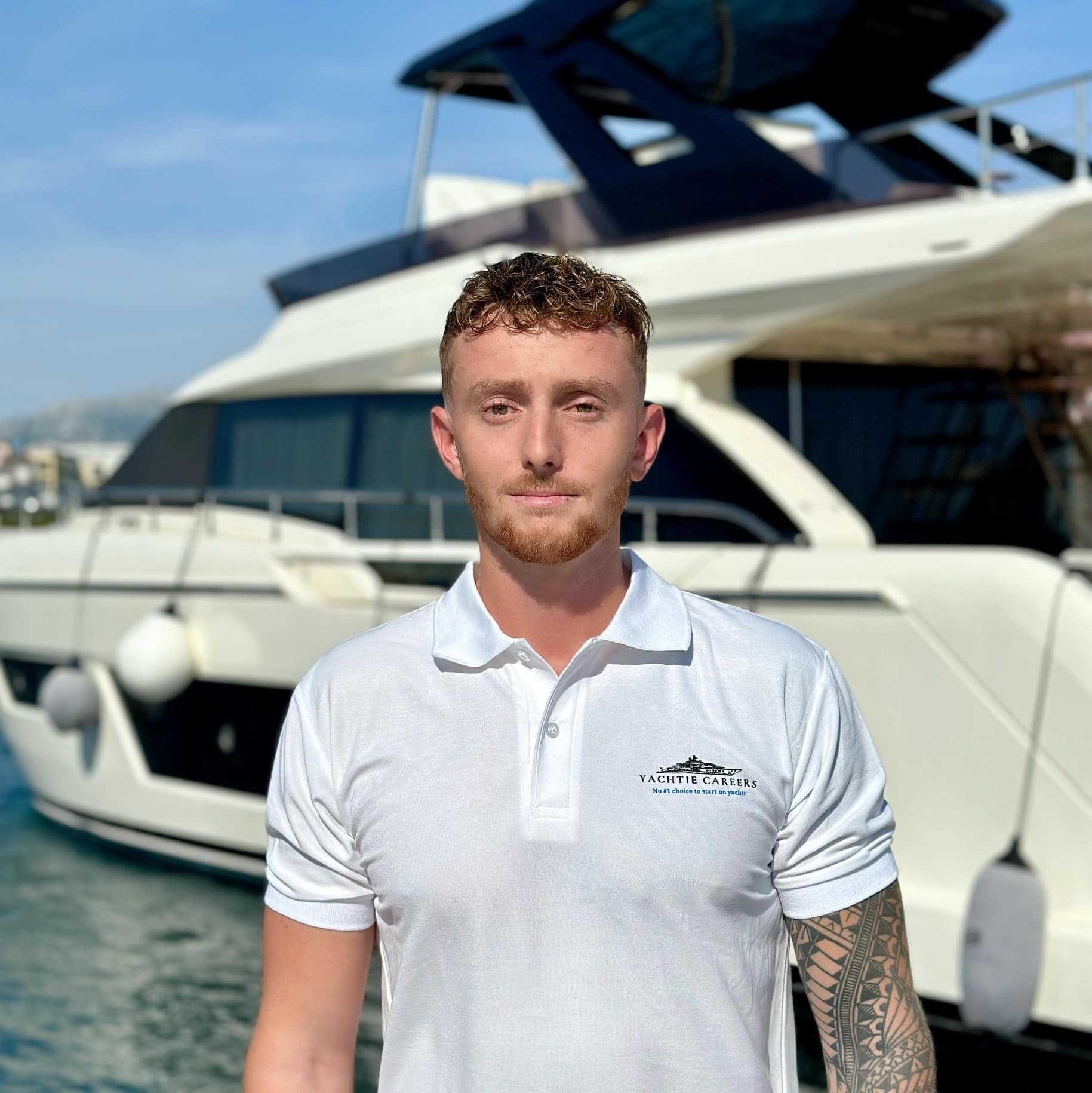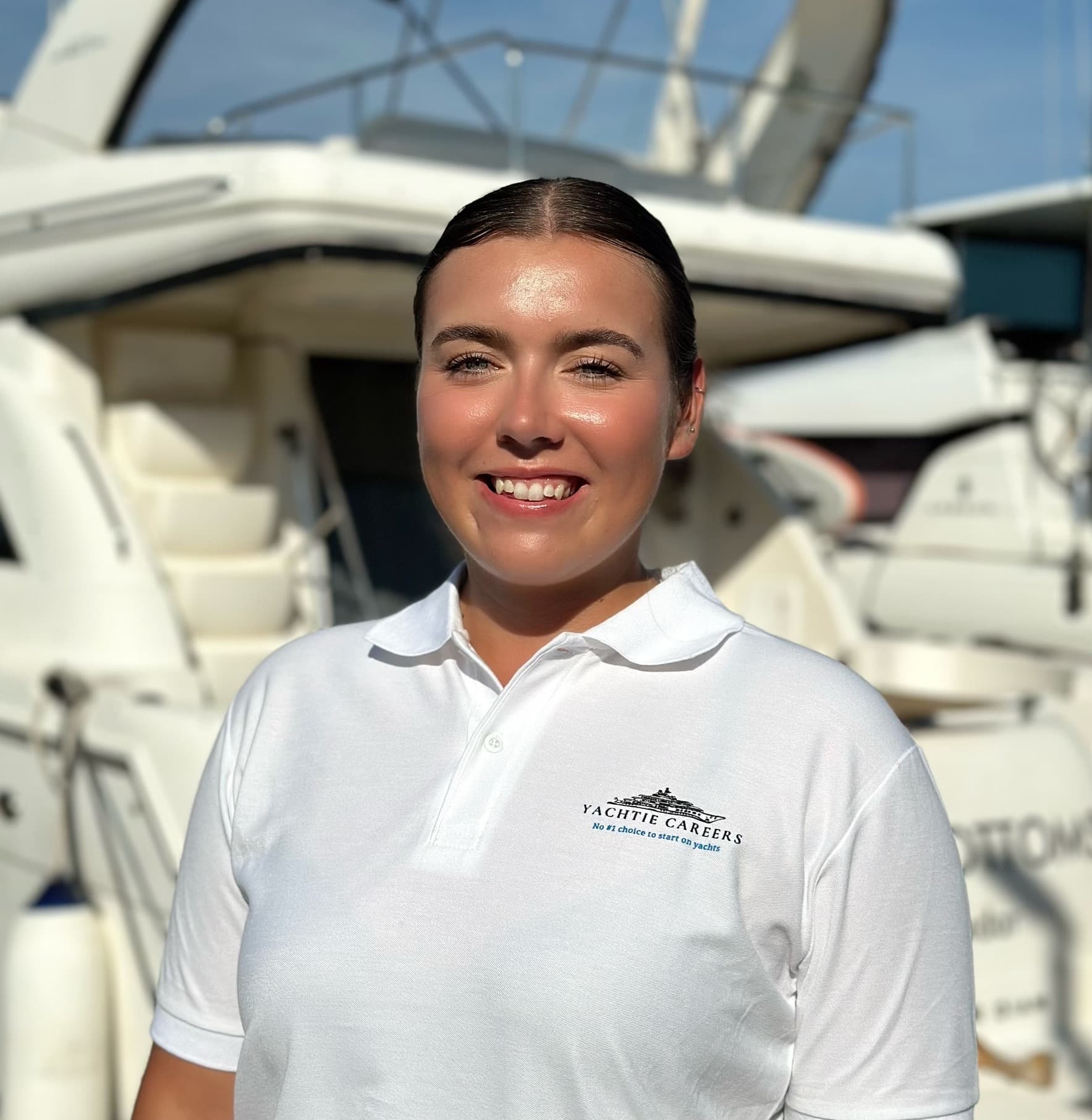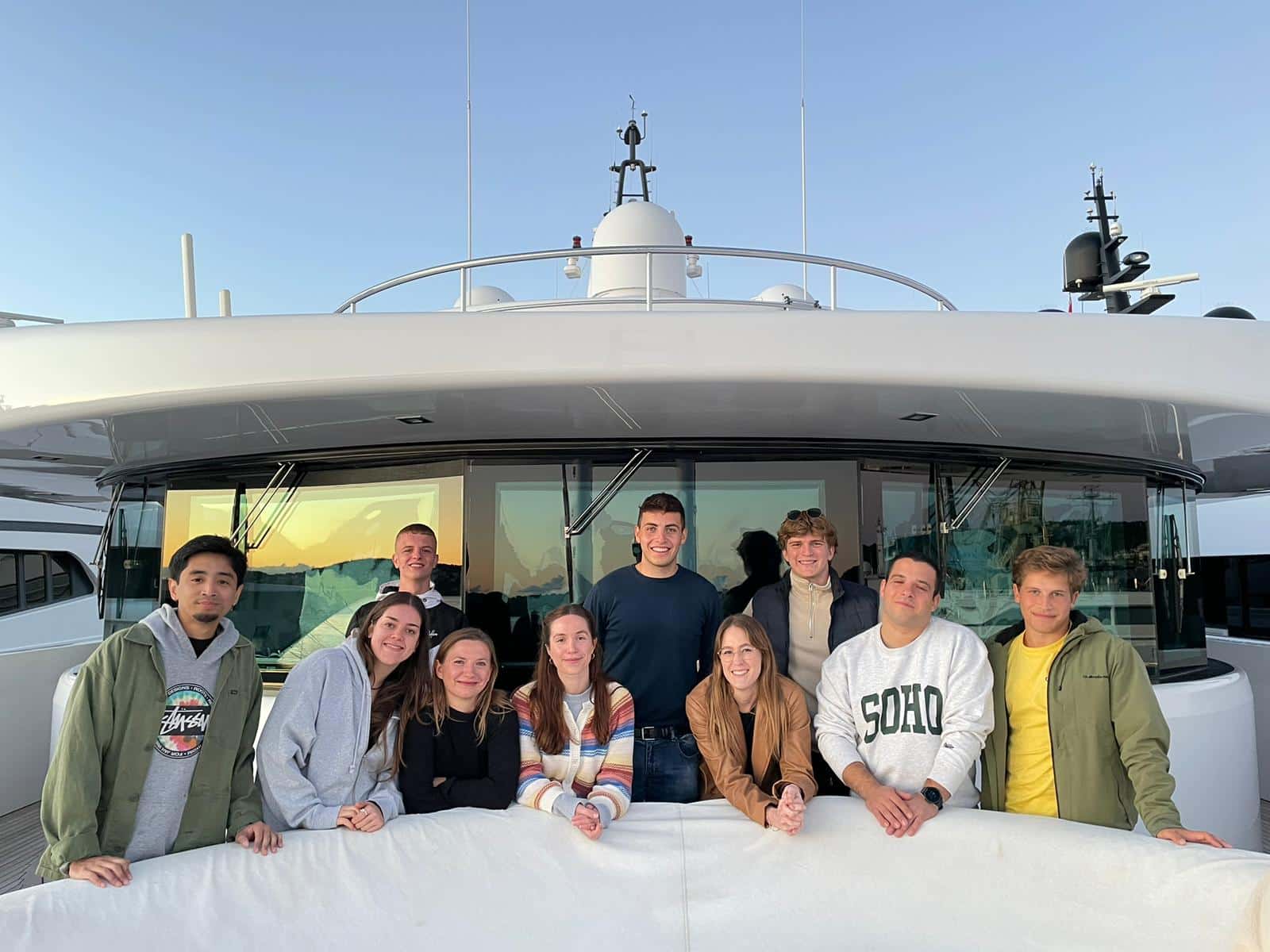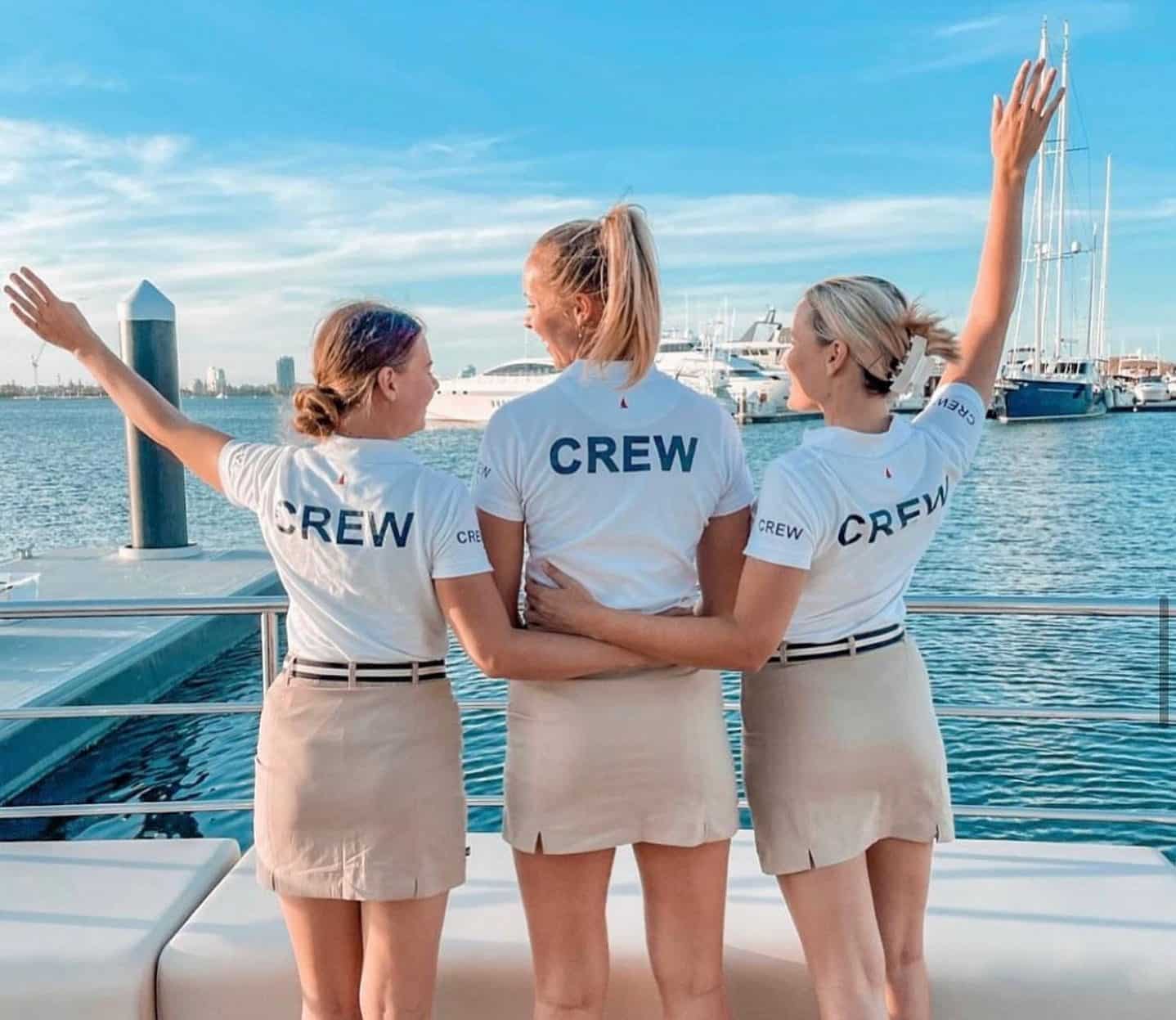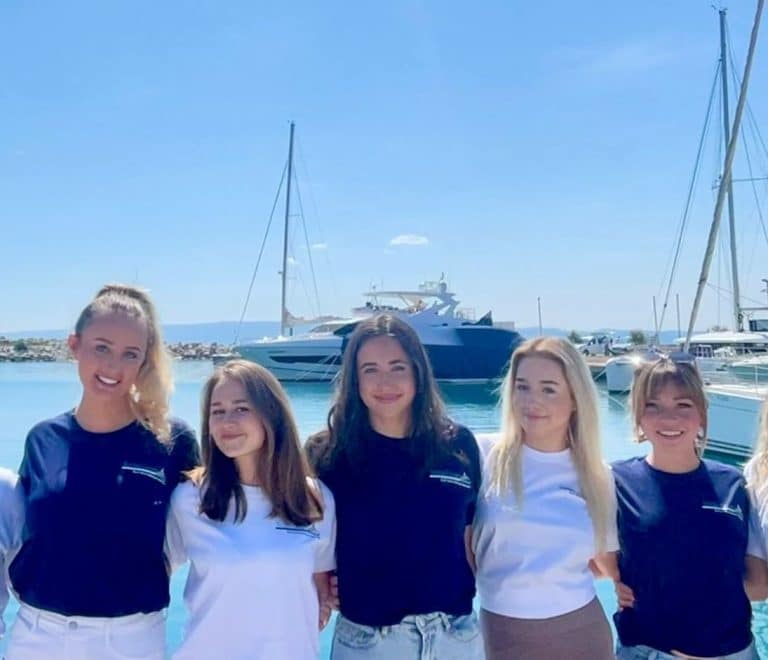
When someone asks us which stewardess course is best, the honest answer is: the one that gets you onto a superyacht. Not the cheapest. Not the closest. Not the one with the most impressive-sounding syllabus. The one that covers every certificate you need, gives you real practical experience on a yacht, and supports you through the job search after you finish. We’ve trained and placed hundreds of stewardesses across the Med and Caribbean. This is what actually matters when you’re choosing a course. For the full career path from zero to first contract, read our guide on how to get a yacht stewardess job. For our own programme details, see our stewardess training packages.

What Separates a Good Stewardess Course From a Box-Ticking One
The yachting industry has a certification problem. There are a lot of courses that will hand you a certificate after a few days and call you qualified. The certificate is real. The preparation isn’t. Chief stewardesses on 50m+ yachts can tell within a week which crew have had proper training and which have just completed a tick-box programme.
The difference isn’t the certificates — everyone has the same certificates. The difference is whether the training built the actual skills: the eye for detail, the service instinct, the understanding of how a superyacht interior operates and what the standard looks like. That only comes from training taught by people who’ve worked at that level, with practical sessions on a real vessel, not a classroom simulating one.
Three questions to ask any programme before you book:
- Who are the instructors, and what are their actual on-board credentials?
- Does the training include practical sessions on a real yacht — not a training room?
- What job search support is included after you finish?
If a programme can’t answer all three clearly, keep looking.
The Certificates You Need — And Why the Full Stack Matters
To work as a stewardess on a commercial superyacht you need five certificates. Not one of them is optional:
- STCW Basic Safety Training — the IMO-mandated foundation. Four practical elements: Personal Survival Techniques, Fire Prevention and Firefighting, Elementary First Aid, Personal Safety and Social Responsibilities. Must be MCA-accepted. Takes 5–6 days of in-person practical training. Any programme that says they can do this fully online is not MCA-accepted — verify before you book.
- ENG1 Medical Certificate — proof you’re medically fit to work at sea. Issued by an approved maritime doctor. Required before your first contract.
- PDSD (Personal Designated Security Duties) — the MCA-accepted security awareness certificate. Required on commercial vessels.
- Crowd and Crisis Management — required for yachts carrying more than 12 guests, which covers most charter superyachts.
- Food Hygiene Level 2 — required for anyone handling food on board. Every stewardess handles food.
Some courses offer these separately and charge for each. Others bundle the full stack. If you’re doing them separately across different providers in different locations, you’re adding weeks and cost to what should be a straightforward process. The best stewardess courses get you all five in one programme, in one place, in as little as 10 days.
What Good Stewardess Training Actually Looks Like
Interior Service Skills — The Real Differentiator
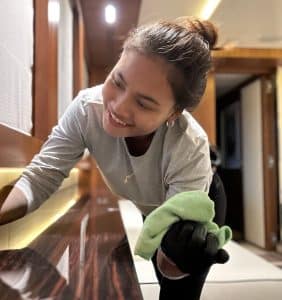
The certificates get you through the door. The service skills determine whether you’re rehired after your first season. Chief stewardesses on larger yachts are looking for crew who understand the standard without needing it explained repeatedly — crew who can set a formal table correctly, manage guest laundry without being asked, deliver a wine flight with confidence, and anticipate what needs doing before being told.
Good training covers all of this in depth: formal table settings, silver service technique, wine and cocktail service, breakfast and informal deck service, cabin turndowns to superyacht standard, laundry management for fine fabrics and guest clothing, housekeeping products and their correct use on yacht surfaces. These aren’t extras — they’re what a chief stew will assess you on in the first week.
At Yachtiecareers, interior training is delivered through YCA online modules combined with practical on-board sessions. The online modules cover housekeeping service, laundry, mixology, wine service, caviar and cigar service, and guest safety. The on-board sessions put those skills into practice on a real vessel in Split marina — not a training room set up to look like one.

Practical Training on a Real Yacht
This is non-negotiable. You can learn the theory of a formal table setting from a video. You cannot learn how to execute it correctly in a superyacht saloon from a video. The physical reality of working in a yacht interior — the crew corridors, the galley workflow, the movement with a full tray in a moving vessel — is something that only comes from doing it on an actual boat.
Any programme that doesn’t include on-board practical training is preparing you for an exam, not a job. Ask specifically where and how the practical sessions run. If the answer is a training centre on land, that’s not good enough.
Instructors With Active Industry Credentials
The most important factor in a stewardess training programme is who’s teaching it. Our instructors — Antonija, Ivana, Charlie, Charlotte — are active Chief Stewardesses on 50m+ superyachts. They teach because they know the real standard from working at it, not because they have a training qualification and have never stepped on a charter yacht.
When Ivana explains what a Chief Stewardess expects when she walks into a guest cabin after a turndown, she’s drawing on hundreds of actual charter seasons. When Antonija covers wine service, she’s teaching what the guests on a 50m Feadship actually expect — not a generic hospitality standard. That difference is what makes training land properly rather than feel abstract.
Why Location Changes How Fast You Get Hired
The Med is where most superyacht jobs start. Antibes, Palma, and Split are the three main hiring hubs for the Med season. Boats prepare for summer in February–May and captains are actively hiring crew during that window. If you finish your training in the UK in March and then fly to Antibes to job search, you’re arriving weeks behind the crew who trained in the Med and started dock walking the moment their course ended.
Training in Split means you’re already in a Med marina when you finish. The dock walking seminars at Yachtiecareers happen during the training week — in the actual marina, with the actual boats. Students introduce themselves to captains and crew with their certificates still warm and a professionally written CV in hand. That timing is a genuine competitive advantage over crew who trained locally and then travelled to the Med.
Read our dock walking guide for the full approach to finding your first job in person, and our guide on timing your Med job search for the seasonal breakdown.

The Part Most Courses Get Wrong: Job Search Support
Most maritime training programmes end when training ends. You walk away with certificates, a handshake, and no further support. For someone who has never worked in yachting before, that’s the most difficult moment — qualified on paper, but with no contacts, no idea where to go, and no one to call when the job search isn’t going the way you expected.
At Yachtiecareers, the job search support is built into every package: dock walking seminars, CV preparation, crew agency registration (Bluewater, OnCrew, YPI Crew, Quay Crew, Wilsonhalligan), and 24/7 access to instructors through a private WhatsApp group before, during and after training. In the Premium Package, this extends to 1 year of unlimited career support with 1-1 consultations, unlimited CV updates, and a written reference letter from a Chief Stewardess to include with your job applications.
The reference letter alone makes a material difference. A first-time stewardess with a reference from a named Chief Stewardess on a 50m superyacht gets a different response from captains than one who lists “training completed” and no reference. We’ve seen this difference hundreds of times.
What Our Graduates Actually Achieve
Heather VanWinkle from the US described choosing Yachtiecareers as the best decision she could make to jump-start her new career. She went Premium — and came away with every certificate, her CV written by an active crew member, deckhand training included, and ongoing support from Antonija after the programme ended. She’s now working on a superyacht.
Lisa Du Toit from South Africa landed her first stewardess job in the Bahamas through the connections and CV preparation from the course. Hattie Atkinson from the UK chose the Premium package specifically for the 1-1 CV writing and the step-by-step guidance — she came away with a CV that opened doors, a reference, and a team that helped her through visas and interview preparation.

“Choosing Yachtie Careers was the best decision I could make in terms of jump-starting my new career. Antonija was always there with such encouraging words, wonderful advice and training. With the Premium package, I also received deckhand training, extra stewardess courses, future support, CV writing and advice on how to proceed. I would recommend Yachtie Careers — I received great training, I was not alone and I have the future support of the team.”
— Heather VanWinkle, USA ★★★★★
What Stewardesses Earn — The Numbers That Make Training Worth It
The financial case for proper training is straightforward. A junior stewardess earns $2,500–$3,500 per month. On a charter yacht, tips add $500–$2,000 per charter week on top of that. A full Med summer season with 15–20 charters can add $10,000–$40,000 in tips alone, split across the crew.
The career progression: junior stewardess → second stewardess ($3,500–$4,500/month) in 12–24 months → Chief Stewardess on a 40–50m yacht ($5,000–$6,500/month) → Chief Stewardess on 60m+ ($7,000–$10,000+/month). Chief Stewardesses on large yachts are among the best-compensated hospitality managers in any sector. The training cost is recovered within the first two months of a first contract.
For the full breakdown by role and yacht size, read our yacht crew salary guide. For the complete step-by-step from certificate to first contract, see our yacht crew job guide.
What It Costs and What You Get
At Yachtiecareers, the Full Package is €2,395 and the Premium Package is €2,940. Both include every required certificate — STCW, ENG1, PDSD, Crowd Management, Food Hygiene — plus on-board practical training, interior service modules through YCA, CV preparation, dock walking seminars, crew agency registration, and 24/7 WhatsApp support from active instructors.
The Premium Package adds: 7 nights crew accommodation in Split, 1-1 CV writing session, unlimited CV updates for 1 year, written reference letter from a Chief Stewardess, 1 year unlimited career support with 1-1 consultations, and dual access to both stewardess and deckhand training content. Secure your place with a €740 deposit. The Premium Package is available in two payments of €1,470.
For comparison: standalone STCW in the UK costs £400–£700 but covers only the four basic safety elements. Adding ENG1, PDSD, Crowd Management, and a service course separately costs £1,000–£2,000+ before accommodation and travel. The all-inclusive route in the Med is faster, better value, and puts you in the right location to find work immediately after qualifying.
Start Your Stewardess Career This Season
10 days in Split, Croatia. Every certificate. On-board practical training. Interior service modules. CV writing. Dock walking prep. Job search support from active Chief Stewardesses — before, during and after the programme.
Premium Package from €2,940 — 7 nights accommodation, 1-1 CV writing, reference letter, 1 year unlimited career support.
Not sure which package is right for you? Book a free call with our team, or read what graduates say on our reviews page.