If you are based in the UK and trying to figure out how to get started in yachting, STCW is going to be the first real decision you make. Where you do it, how much you spend, and what happens after you finish will shape how quickly — or slowly — your career gets off the ground. We want to give you an honest picture of your options, not just push you toward ours.
What Is STCW Basic Safety and Why Does It Matter
STCW Basic Safety is the foundation qualification for working as paid crew on any commercial or charter yacht over 24 metres. It is not optional. No captain can legally put you to work without it, regardless of your background, your confidence on the water, or how many holidays you have spent on boats. The course covers five areas: personal survival at sea, fire prevention and firefighting, elementary first aid, personal safety and social responsibility, and security awareness. It takes five days to complete in person. There is no way to do it fully online — the practical components, particularly the firefighting and sea survival exercises, have to be done in a real training environment. Once you have it, the certificate is valid for five years. After that you need a two-day refresher to renew it. That is the same wherever in the world you complete it.

Your Options as a UK-Based Crew Member
The most important thing to understand is this: the STCW certificate you receive from a UK provider and the one you receive from a training centre in Croatia, Spain, or France are identical. STCW is an international standard set by the IMO. What matters is that the course is MCA-accepted — not where it is delivered. So the real question is not which UK provider to choose. It is whether completing your STCW in the UK is actually the right move for you at all. UK providers charge between £600 and £900 for the standalone five-day course. You get your certificate and you go home. Some providers are excellent. The course content is standardised, so the training itself will be similar wherever you go. If you have a strong reason to stay in the UK — work commitments, family, financial constraints — then doing it locally makes sense. Just make sure the provider is on the MCA approved list before you book.
Why a Lot of UK Crew Choose to Train in the Mediterranean
Here is something we see consistently: crew who complete their STCW in the UK and then try to find their first job from home wait a long time. Not because they did anything wrong, but because yachting is a physical industry. Captains hire people they can meet, interview face to face, and sometimes put to work the same week. Being in the right place matters. The majority of our UK students come to Split, Croatia for training because they want to be in the Mediterranean — where the yachts are — at the right time of year, with their fresh certification, their deckhand CV or stewardess CV written and ready, and the ability to walk the docks the moment training finishes. We run job search seminars during every training intake. Our Chief Officers write every deckhand CV. Our Chief Stewardesses write every stewardess CV. Students apply to Yotspot, crew agencies, and direct contacts while our instructors are in the room with them. We also organise dockwalking sessions in Split marina, where dropping your CV in person to a captain or first officer still gets results that online applications alone cannot match. Most of our students have their first job within one to two weeks of completing training. A significant number receive offers during the training week itself. That is not a sales pitch. It is what we see happening, intake after intake.
What You Need Beyond STCW
STCW gets you past the first gate. To be genuinely competitive in the job market, there are a few more things worth knowing about.
ENG1 Medical Certificate — This is the MCA seafarers medical and you need it before you can work on a yacht. Book it with an approved doctor in the UK before you travel for training if possible. It costs around £150 to £200 and takes an hour.
RYA Powerboat Level 2 — If you want to work as a deckhand, this one matters. Driving the tender is a daily job on most yachts and captains actively look for it on a CV. It is not mandatory at the start but it makes a real difference.
Food Hygiene Level 2 — Essential for stewardesses. Required on most charter yachts and straightforward to complete — available online or as a one-day in-person course. None of these are complicated. The key is getting them done before you start applying, not after you are already frustrated that you are not hearing back. You can also find a full breakdown of what yacht crew earn and the visa requirements for working on yachts in Europe if you are planning to work in the Mediterranean.
Full Training Packages for UK Crew
If you want to do everything in one go — STCW, CV, job search, and getting yourself into the Med at the right time — our full packages are built around exactly that.
Superyacht Stewardess Full STCW Package — STCW, Food Hygiene, professionally written CV, job search seminars, and placement support.
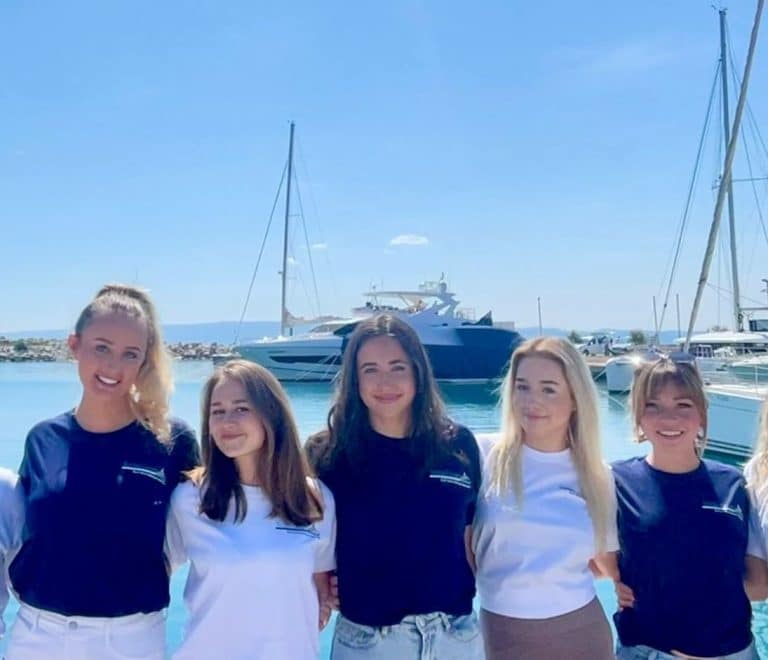
Superyacht Deckhand Full STCW Package — STCW, professionally written CV by a Chief Officer, job search seminars, and dockwalking in Split. Over 200 of our students have left verified reviews of their experience on Trustpilot and Google Reviews. Read those before you decide — real crew, real outcomes, real timelines. We have written this by the Yachtiecareers crew training team — Drazen, Suda, Ivana, Charlie, and Antonija — based on training 20+ students per month, including hundreds of crew from the UK.
Frequently Asked Questions
Is STCW completed in Croatia valid in the UK and internationally?
Yes. STCW is set by the IMO and recognised in every country that operates commercial yachts. As long as the course is MCA-accepted, it does not matter where you completed it. Our STCW Training in Croatia is fully MCA Accepted.
How much does STCW cost in the UK?
UK providers typically charge £600 to £900 for the five-day standalone course. This does not include CV writing, job search support, or accommodation.
Can I do STCW online?
No. The practical components — sea survival and firefighting — must be completed in person at an approved training facility.
How long is the STCW certificate valid?
Five years, after which a two-day refresher course is required to renew it.
Do I need STCW to work on a private yacht?
If the yacht is over 24 metres and commercially operated or on charter, yes. Most captains expect it regardless of vessel size.
What is the best time of year for UK crew to start their STCW training?
February to April for the Mediterranean season. October to November for those targeting the Caribbean. Training just before peak hiring season gives you the best chance of finding your first position quickly.