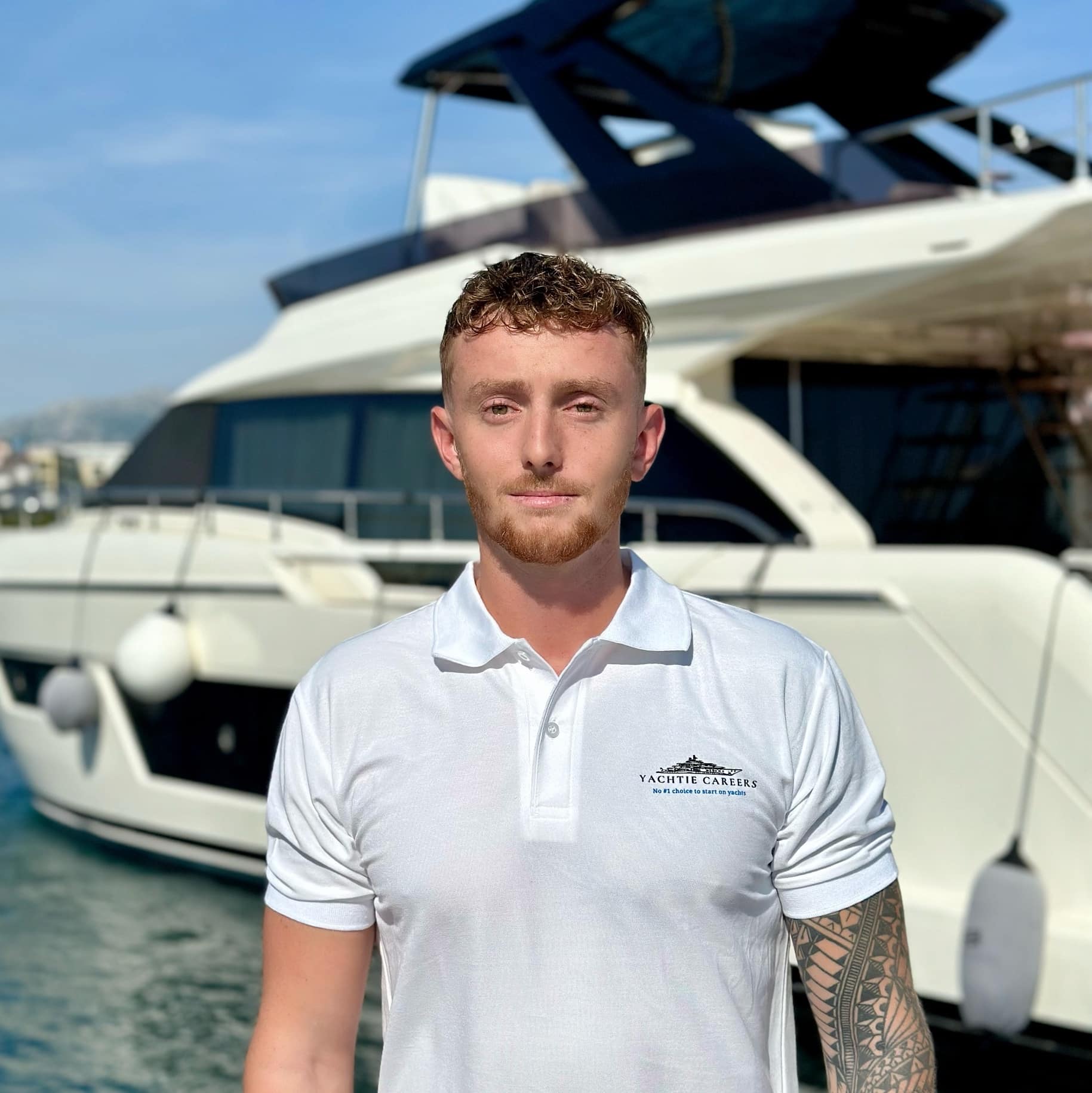
This is one of the most common questions we get on WhatsApp before someone books training. “I have tattoos — is that going to be a problem?” The honest answer: for most yachts, no. We have trained and placed crew with full sleeve tattoos on 100m superyachts. Several of our own instructors have tattoos. The yachting industry has changed significantly in the last decade and the idea that tattoos are a career-ending barrier in this industry is outdated. That said, there are some nuances worth understanding before you apply. For the full path from zero to first contract, read our yacht crew job guide. For training that gets you onto a boat, see our stewardess and deckhand training packages.

The Short Answer: Most Yachts Hire Crew With Tattoos
The superyacht industry is crewed by people from every background — former military, hospitality professionals, athletes, artists, people who’ve spent years in surf culture or adventure sports. Tattoos are common. We have personally worked alongside crew with full arm sleeves, shoulder pieces, and significant visible ink on vessels up to and including 100m superyachts. The idea that tattoos automatically disqualify you from yachting is a myth that has no basis in current industry reality.
What actually gets you hired — or not hired — is your attitude, your professionalism, your certificate stack, and whether you present yourself well to a captain. A crew member with a full sleeve who is prepared, qualified, and personable will get more jobs than a crew member with no tattoos who hasn’t prepared properly. Every time.
Where Tattoos Can Genuinely Matter
Honesty matters here, so let’s be specific about the situations where tattoos can be a factor:
Face, Neck, and Hand Tattoos
Tattoos on the face, neck, and hands are the exception where you may encounter resistance — not because of any industry-wide rule, but because these are visible even in uniform and some captains on very formal private yachts do have personal preferences. This is a small subset of the fleet. Most yachts will not eliminate a candidate over a neck or hand tattoo if everything else about that person is strong. But it’s the area of most potential friction, and it’s worth knowing before you apply.
Very Formal Private Yachts With Conservative Owners
Some private yachts — particularly those owned by more traditional or conservative families — may have stricter guidelines around crew appearance. These are a minority of the overall fleet. Charter yachts, which represent the largest sector of the industry and where most first-season crew start, are generally far more relaxed. The captain’s own attitude matters more than any blanket rule.
Guest-Facing Roles on Ultra-Formal Yachts
Chief Stewardesses on the most formal yachts — think formal dinner service every evening, multiple courses, white gloves — may prefer interior crew without highly visible tattoos in guest-facing situations. Again, this is a small part of the fleet. Most charter yachts and the majority of private yachts are not operating at this level of formality.

What Our Instructors and Crew Actually Look Like
Drazen, our Chief Officer with 10 years on 100m superyachts, has tattoos. He has worked on some of the most prestigious vessels in the world and has trained and worked alongside crew with full sleeves, chest pieces, and significant visible ink throughout his career. The standard he applies when assessing a new crew member has nothing to do with tattoos and everything to do with how that person shows up, how quickly they learn, and whether they can be relied upon.
Jack and Josh, our Bosun instructors, have the same view. On deck, what matters is whether you handle a line correctly, whether you’re where you need to be when you need to be there, and whether you’re someone the team can count on. Tattoos have never been part of that assessment.
Practical Tips: Tattoos and the Job Search
There are a few straightforward things worth doing when you’re looking for your first job:
Cover What You Can During Initial Meetings
When you’re dock walking and meeting captains or bosuns for the first time, wearing long sleeves is a simple way to make the first impression about you — your handshake, your preparation, your questions — rather than your ink. Once you’re in conversation and they can see you’re a serious candidate, it becomes irrelevant. This isn’t about hiding who you are; it’s about controlling what leads in a 30-second introduction.
Be Direct If It Comes Up
If a captain asks about your tattoos, answer directly and confidently. “Yes, I have tattoos — I can cover them in uniform if that’s a concern.” Captains respect straightforwardness. A candidate who answers confidently and offers a practical solution is a more attractive hire than one who gets defensive or awkward.
Let Your Preparation Do the Talking
Arrive at every introduction with your full certificate stack complete, a professionally written CV, and a clear answer to “why do you want to work on yachts?” A captain who is looking at someone fully prepared with STCW, ENG1, PDSD, Crowd Management, Food Hygiene, a strong CV and a reference letter is thinking about whether they want to hire this person — not about what’s on their arms.
Read our dock walking guide for the full approach to making the right first impression in person. For the full salary breakdown by role, see our yacht crew salary guide.
The Bigger Picture
The yachting industry employs tens of thousands of crew worldwide. It is a diverse, international, and increasingly open industry. The crew on any given superyacht in any given season will include people from 10 different countries, multiple professional backgrounds, and a wide range of personal styles. Tattoos are part of that reality — they always have been, and the industry has never been the conservative, strictly formal environment that the question implies.
If tattoos have been the thing stopping you from looking into yachting seriously, stop letting it. The qualification that matters is your STCW. The impression that matters is how you show up. Everything else is secondary.
Get Qualified and Start Your Yacht Career
10 days in Split, Croatia. Every certificate you need — STCW, ENG1, PDSD, Crowd Management, Food Hygiene — plus CV writing, dock walking prep, and job search support from active superyacht crew.
Premium Package from €2,940 — 7 nights accommodation, 1-1 CV writing, reference letter, 1 year unlimited career support.
Questions? Book a free call with our team, or read what graduates say on our reviews page.
Frequently Asked Questions
Can you work on superyachts with tattoos?
Yes. Most superyachts hire crew with tattoos. The industry has crew with full sleeves, chest pieces, and significant visible ink working on vessels of all sizes including the largest superyachts in the world. Tattoos are not a disqualifying factor for the majority of yachts.
Are there any tattoos that could be a problem on yachts?
Face, neck, and hand tattoos can occasionally encounter resistance from a small number of very conservative private yacht owners. This is the exception, not the rule. Offensive imagery would be a separate issue on any yacht. For the vast majority of the fleet — charter yachts and most private yachts — tattoos are not a significant factor in hiring decisions.
Do yacht crew have to cover tattoos?
There is no industry-wide rule requiring tattoos to be covered. Some individual yachts may have their own guidelines. When dock walking or meeting captains for the first time, wearing long sleeves is a practical choice to ensure the first impression is about you as a professional — not your appearance. If a captain asks, answer directly and offer to cover if needed.
Will tattoos stop me from becoming a yacht stewardess or deckhand?
No. Stewardesses and deckhands with tattoos are working on superyachts globally, including on the largest and most prestigious vessels. What determines whether you get hired is your preparation, your certificates, your CV, and how you present yourself. Tattoos are not part of that equation for the overwhelming majority of yachts.
Do I need to declare tattoos on my yacht crew CV?
No. Tattoos are not relevant information for a yacht crew CV. Your CV should cover your certificates, experience, and skills. Tattoos will be visible in person if relevant — there is no need to mention them in writing.