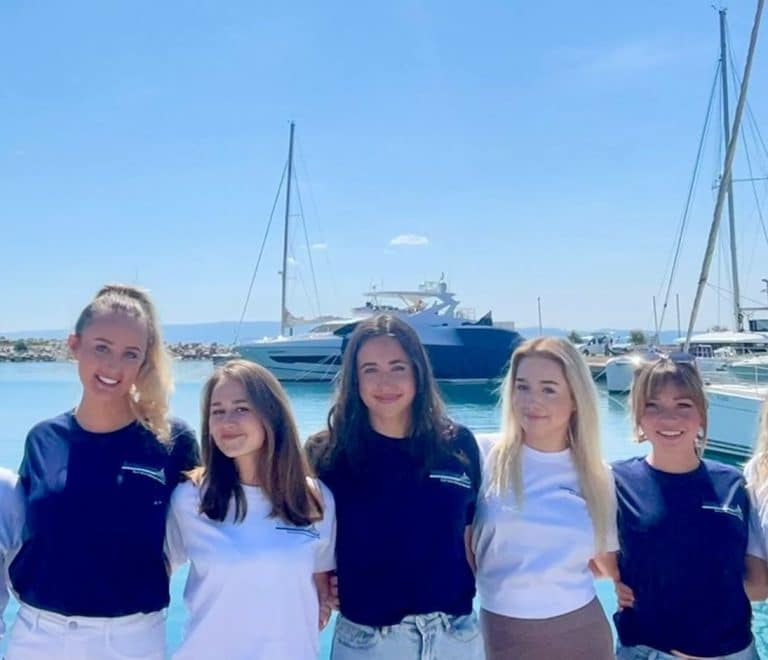
One of the first things people ask us is: “When is the right time to start?” The honest answer — any time you’re ready. There is no single “yacht season.” The yachting world runs all year. When summer ends in Europe, the Caribbean season kicks off. When boats come out of the water for maintenance, they need crew to do that maintenance. If you’re waiting for the perfect moment, you’ll be waiting forever. The good news: winter in Europe might actually be the best time to land your first job. Read our full guide on how to get a yacht crew job and our yacht crew salary guide to see what you can earn at every level.
Where Are All the Yachts in Winter?
Every October and November, hundreds of superyachts leave the Med summer circuit and head to one place: the shipyard. They need painting, engineering work, interior refits, deep cleaning, new equipment fitted, teak sanded, hulls polished. This takes months. And every single one of those boats needs crew while it’s happening.
Here are the main European winter hubs — and what’s actually going on in each one:
Palma de Mallorca, Spain
Palma is the biggest superyacht refit hub in Europe. The boatyard complex there — Astilleros de Mallorca, Palma Superyachts, and a cluster of smaller yards — handles some of the largest yachts in the world over winter. The marina itself stays active year-round. Hundreds of yachts, hundreds of positions. Palma is the number one place to be if you want a winter job in Europe. Walk the docks in November with your certificates ready and you will find work.
La Ciotat, France
Just east of Marseille, La Ciotat is home to one of the most capable superyacht refit facilities in the world. The shipyard hauls out boats up to 180m. In winter it is full of large yachts with full crew complements being maintained and upgraded. La Ciotat is less well-known than Antibes as a crew destination, which means less competition. Antibes marina itself stays active in winter too — a lot of yachts winter in the water there rather than going into a yard.
Genoa and La Spezia, Italy
Genoa has a long shipbuilding history and the infrastructure to match — multiple yards handling superyacht refit and new builds year-round. La Spezia, an hour down the coast, is smaller but has a working marina with yachts in refit all winter. Italy’s north-west coast is genuinely underused by crew looking for their first job. Most people flock to Antibes or Palma. Genoa and La Spezia are less crowded, the captains are more accessible, and the yards are real.
Viareggio, Italy
Viareggio is where a lot of the world’s biggest superyachts are built and refitted. The Benetti and Azimut|Benetti yards are here. Large yachts in build or deep refit need deck crew, interior crew, and general hands throughout the winter. It’s not a typical dock-walking destination but if you’re willing to show up and knock on doors it is absolutely a place where first-season crew have found their first boat.
Malta
Malta sits in the middle of the Mediterranean and runs as a year-round yachting hub. The Grand Harbour and Msida Marina have yachts in refit all winter. Malta has a big advantage for first-season crew: it’s an English-speaking country, relatively affordable to live in for a few weeks while you’re looking for work, and the dock-walking culture is active. Captains and bosuns based in Malta in winter are often more approachable than the peak-season rush in Antibes.
Barcelona, Spain
Barcelona’s Port Vell has a permanent superyacht marina and several refit facilities. It’s a major city with a lower cost of living than the south of France, English is widely spoken in the yachting community, and there are always yachts there year-round. It’s not as concentrated as Palma for sheer volume of refit work, but it’s a real option — particularly for crew who want to spend a few months somewhere they can actually afford while they look for their first job.
Why Winter Is Actually Better for First-Season Crew
Here’s something most people don’t realise until they’ve done a season: April in Antibes is the worst time to look for your first job. Everyone is there. Thousands of CVs land on boats in the same two-week window. Captains are overwhelmed. They don’t have time to take a chance on someone with no sea time when there are 50 experienced candidates already in the pile.
Winter is the opposite.
Captains Have Time to Talk to You
In a shipyard in January, a captain or bosun is not in the middle of a charter week with guests on board. They’re supervising maintenance work, managing contractors, dealing with the yard. They have time. If you walk up to a boat in a Palma shipyard in November and introduce yourself properly — certificates ready, CV in hand, confident and polite — you will get a conversation. Those conversations turn into trial days. Trial days turn into jobs.
You Learn Without Guests Watching
Drazen, our Chief Officer instructor who spent 10 years on 100m superyachts, says it clearly: “The best deckhands I’ve worked with all learned the same way — in a yard, in winter, with time to do things properly. Nobody’s watching the clock. Nobody’s panicking about a charter starting in two hours. A bosun can actually show you how to do something and let you practise it until you get it right. By the time the season starts in April, you already know what you’re doing.”
A junior stewardess who joins a boat in refit gets to learn the whole interior — the silver, the service standards, the owner’s preferences, how the chief stew runs things — before a single guest steps on board. That is a completely different start to a career than joining mid-charter-season and learning everything at full speed under pressure.
The Pay Is the Same
There is no “off-season rate” in superyachting. A junior deckhand in a Palma shipyard in January earns the same $2,500–$3,200/month as a junior deckhand on the Côte d’Azur in August. The only difference is charter tips — you earn fewer tips during yard periods than during an active charter season. But the base salary is identical. And if you end up on a charter yacht in the Caribbean winter, tips are as good as the Med summer. See the full breakdown in our salary guide.
The Caribbean: Winter Is the Season
While European yards are full of boats in refit, the Caribbean is at its busiest. The charter circuit runs from Antigua and St Martin down through the British Virgin Islands, St Lucia, Grenada, and Barbados. The main crew hubs are:
- Antigua — English Harbour and Falmouth Harbour. The Caribbean equivalent of Antibes. Crew agencies, dock walking, boats looking for crew from November through April. It’s a small island and the yachting community is concentrated — you will meet everyone within a week.
- St Martin. Both the French and Dutch sides have active charter fleets. A lot of yachts base here for the winter season. Less hectic than Antigua, still plenty of boats.
- Martinique and Grenada. Less popular as crew destinations but both have marinas with yachts working the charter circuit. Less competition than Antigua.
Many experienced crew rotate between the Med summer and Caribbean winter and never stop working. For a first-season crew member, flying out to Antigua in November with your certificates ready is a completely valid path — the approach is exactly the same as the Med: dock walk, register with agencies, say yes to day work.
What You Need Before You Go — Winter or Summer
The certificates are the same regardless of season. No captain will take you on without them:
- STCW Basic Safety — the foundation. Six days of practical training: firefighting, sea survival, first aid, personal safety. Read our full STCW guide.
- ENG1 Medical Certificate — your seafarer’s medical. Arranged through an approved maritime doctor.
- PDSD — Proficiency in Designated Security Duties. Required for commercial vessels.
- Crowd Management — required on yachts carrying more than 12 passengers.
- Food Hygiene Level 2 — required for anyone involved in food preparation or service.
All of these can be done in a single 10-day programme in Split. You arrive with nothing and leave with every certificate you need to start work on any commercial yacht in the world. The timing works perfectly: train in October, be in Palma or Antigua by November with your full certificate stack ready.
Get Certified and Start This Winter
10 days in Split, Croatia. Every certificate you need — STCW, ENG1, PDSD, Crowd Management, Food Hygiene — plus CV writing, dock walking prep, and job search support from active superyacht crew.
From €1,790. Secure your place with a €740 deposit. Free date changes.
Questions? Book a free call with our team, or read what our graduates say on our reviews page.
Frequently Asked Questions
Is yachting only a summer job?
No. Yachting is a year-round industry. The Mediterranean summer charter season runs April to November. From November to April, hundreds of yachts go into refit across European shipyards and the Caribbean runs its peak charter season simultaneously. There are paid jobs available in every month of the year.
Can I get a yacht job in winter with no experience?
Yes — and winter is often easier than summer for first-timers. Captains and bosuns have more time to meet new crew during refit periods than during a busy charter season. The competition from experienced crew is lower. Palma, La Ciotat, Malta, Genoa, and Barcelona all have active winter refit activity and boats genuinely looking for crew.
Which shipyards and marinas have the most winter jobs for crew?
In Europe: Palma de Mallorca (largest volume), La Ciotat in France, Genoa and La Spezia in Italy, Viareggio in Italy, Malta’s Grand Harbour, and Barcelona’s Port Vell. In the Caribbean: Antigua (English Harbour), St Martin, and Martinique are the main crew hubs for the winter charter season.
Do you earn less on a yacht in winter?
Base salary is the same year-round. A junior deckhand earns $2,500–$3,200/month in a Palma shipyard in January and the same in the south of France in August. The difference is charter tips — fewer during a yard period, the same as the Med summer if you’re on a Caribbean charter yacht in winter.
What is the best time of year to start a yacht career?
As soon as your certificates are done. October and November are ideal — you’re positioned to start either the Caribbean charter season or the European refit season immediately. Waiting for the April rush in Antibes means competing with thousands of other CVs when captains have no time to take a chance on someone new.
Where can I find work on yachts in the Caribbean in winter?
Antigua (English Harbour and Falmouth Harbour) is the main hub — dock walking culture, crew agencies, boats actively looking for crew from November through April. St Martin is the second major option. Martinique and Grenada are smaller but real. Fly in with your full certificate pack, register with local agencies, and dock walk daily the same way you would in Antibes.
What certificates do I need to work on yachts in winter?
The same as any other time of year: STCW Basic Safety, ENG1 Medical Certificate, PDSD, Crowd Management, and Food Hygiene Level 2. No captain will take you on without the full stack — in winter or summer. All five can be completed in a single 10-day programme.
Is there really demand for junior crew in winter?
Yes. Refit periods are exactly when captains look for trainable junior crew. There’s no pressure of a charter schedule, no guests on board, and experienced crew have time to actually teach. A junior deckhand or stewardess who starts in a yard in November and works through until the season starts in April arrives in summer already knowing what they’re doing — that’s a major advantage over someone who started in April with no sea time.
Can I work on yachts year-round?
Yes. Most career crew work year-round — Med summer, Caribbean winter, repeat. Both seasons pay the same base salary. Charter tips in both are comparable. The crew who earn the most are the ones who are always available and never sit out a season waiting for the “right time.”
Written by the YachtieCareers team — Antonija, Ivana, Charlie and Charlotte (Chief Stewardesses on 50m superyachts), Drazen (Chief Officer, 10 years on 100m superyachts), Jack and Josh (Bosuns). Every guide is written by people actively working in the industry. We train 20+ students every month and have placed 600+ crew on board superyachts worldwide. Book a free call with our team, or read what our students say on our reviews page.